
Repton

Buy
Part of collection:
Repton

Repton 3 had a few new features: fungus, time capsules, crowns and a timebomb which must be defused to complete each level.
Repton, the eponymous protagonist, walks around an underground maze in a quest to find all the diamonds (some being held in safes, their release being triggered by finding and collecting a key) within a time limit in each of several levels, while avoiding being trapped or killed by falling rocks and monsters hatched from eggs. The original Repton game was released in the summer of 1985 and has 12 levels, with passwords making it possible to jump directly to later levels. If passwords were used though, on completion of the final level, the displayed message challenged the player to complete the game without using them.

Repton 2 follows the same basic 'Boulderdash' puzzle style gameplay as its predecessor, and also adds a few new features to freshen things up: meteors, which would fall from the sky and kill upon contact, skulls, static objects that would kill the player if they were careless enough to walk into it, and the fast-moving spirits which would journey around the map hugging walls and objects and veering to any left-angles they came across.
Could be interesting
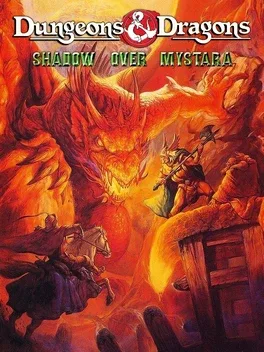
Shadow over Mystara is a side-scrolling beat-'em-up with role-play elements that make it stand out from other similar games released at the time. In addition to the original four heroes found in its predecessor, Dungeons & Dragons: Tower of Doom (Cleric, Dwarf, Elf and Fighter), Shadow of Mystara adds a Thief and a Magic-User to the selection. Furthermore, with the inclusion of two separate versions of each character's sprite set, the game allows up to two players to select the same character (in Tower of Doom each of the characters could only be selected once), effectively giving the game 12 "different" characters to choose from. The two Clerics and two Magic Users also have subtle differences within their spell books. The controls are using four buttons: Attack, Jump, Select (brings up a small inventory ring around the character allowing the player to choose what item is set in the Use slot) and Use. The Cleric, Elf and Magic-User also have two extra rings for their spells, with the Jump button used to switch from ring to ring. While the game uses the same kick harness as the previous game, the Select and Use buttons are reversed. Shadow over Mystara also introduced a selection of special moves which are executed by moving the joystick and tapping the buttons in certain combinations, in a way similar to the Street Fighter series. The characters (except for the Magic-User) have a Dashing Attack as well as a Rising Attack which can be used to combo monsters or even juggle them in the air. Most characters (again, with the exception of the Magic-User and also Cleric) also have a Megacrush, a move common to nearly all of Capcom side-scrollers, which damages all enemies standing close enough to the character but in turn also damaging the player themselves.

Dawn of Mana, as the title suggests, focuses on the origins of Square's Secret of Mana action RPG series, touching upon the genesis of both the Mana Tree and the Sword of Mana. The game takes place on the once idyllic island named Illusia, where the life-giving Mana Tree has dried up and turned to stone. In desperate need of a hero, Illusia calls upon one of its own to save the land from a dire threat. Players will guide this young warrior on an epic quest that will have them adventuring across a completely 3D world for the first time in the series. From majestic plains to towering mountains, the interactive environments in Dawn of Mana offer an assortment of places to visit, characters to meet, and creatures to battle. The combat system once again unfolds in real-time, with players able to jump, slash with a sword, fire projectiles, and even swing a whip that can attach itself to objects.

Tritorn II: Road of Darkness is an Action RPG developed by XAIN Soft and released in 1988. It is the second game in the Tritorn trilogy.

Tritorn Final is an Action RPG developed by Lee Way and published by XAIN Soft for the Sharp X68000 home computer in 1989. It is the final entry in the Tritorn trilogy.

Rubi: The Wayward Mira is a game about saving a dying planet. It's a 2D action-adventure platformer game teeming with lush pixels, featuring ability-based progression mechanics (AKA - Metroidvania) paired with RPG elements in a sci-fi / fantasy setting, where science and magic come together. In addition to a solid core experience, Rubi features non linear gameplay, along with multiple playstyles and endings.

Enter a world of magic and mystery, where your closest allies may sometimes turn out to be your worst enemies. Shining Soul puts you in the middle of a desperate struggle between the Dark Dragon and a group of warriors known as the Shining Fleet. In the final stage of the war, you can play one of four character classes: fighter, wizard, archer, or dragonute. Customize your character's color schemes, weapons, and armor, and then explore the world of Shining Soul either alone or with three of your friends.
The Last Story takes place upon the island fortress of Lazulis, in a world that is slowly being drained of life by an unknown force. The story focuses on a group of mercenaries looking for work on Lazulis; one of their number, Zael, dreams of becoming a knight. During gameplay, the player controls Zael as he and the mercenary group to which he belongs undertake missions on Lazulis. Zael can command the rest of the mercenary squad during missions, and fights in battles that involve action, tactical and stealth elements.
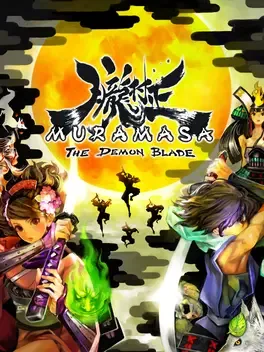
Based on ancient Japanese lore, Murumasa: The Demon Blade plunges players into the mystical Genroku era, ruled by the skilled shogun Tsunayoshi Tokogawa. But this culture is threatened; Tokugawa's thirst for power leads to a conflict over the enormously powerful, though cursed, Demon Blades. Used in hatred, drenched in blood, the cursed blades condemn those who use them to tragedy, madness, and untimely deaths. As chaos spreads, denizens from the netherworld breach their realm as these malevolent swords summon evil spirits -- and the Dragon and Demon Gods as well. Featuring hand-drawn 2D art reflecting the heritage and tone of the storyline, Muramasa: The Demon Blade transports players into a little known mythology, envisioned by the creators of the critically acclaimed Odin Sphere. Players take on the role of a male ninja or female kunoichi, utilizing their ninja prowess to traverse the clever side-scrolling levels that feature vertical progression as well as the traditional horizontal stage advancement.

An interactive game Doodle which celebrates the 82nd birthday of Gerald “Jerry” Lawson, one of the fathers of modern gaming who led the team that developed the first home video gaming system with interchangeable game cartridges. The Doodle features games designed by three American guest artists and game designers: Davionne Gooden, Lauren Brown, and Momo Pixel.

In a dying world, legend has it that a Chosen One will one day rise from amongst the people and the land will be reborn. The line between good and evil blurs in this epic adventure where the fate of two interlocked worlds hangs in the balance.