
JJ
Buy
Part of collection:
Tobidase Daisakusen
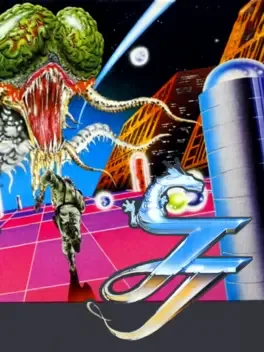
JJ is an action game developed and published by Square for the Famicom in 1987. In English, it is sometimes referred to by its long form, Jumpin' Jack, or by its subtitle, Tobidase Daisakusen Part II. The game was only released in Japan. The sequel to Tobidase Daisakusen (known in North America as 3-D WorldRunner), JJ is a typical scrolling shooter, but it incorporates a third-person view, where the camera angle is positioned behind the main character. As in the previous title, the main character Jack must travel through various worlds, armed with his laser cannon and jumping ability, to defeat the serpentbeasts who have overrun the planets. JJ was the last game by Square to utilize the "3D mode" and 3D glasses, and was Square's last work before the inception of the popular Final Fantasy franchise. The soundtrack of JJ consists of eight tracks, and all of them are either remixed or reused from the game's prequel, 3-D WorldRunner. The game was scored by Nobuo Uematsu, and is Uematsu's 16th work of video game music composition.
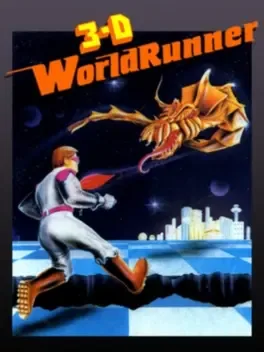
The battle of a lifetime comes alive in 3-D! The wildest of the space cowboys is out looking for adventure. Now he's got it and he needs your help. A strange world terrorized by Grax, the Alien Serpentbeast, has asked you, Worldrunner, for help. Knowing you can outrun, outjump and outblast anyone or anything, you race into battle. But this is no ordinary fight. These battles will carry you to eight strange planets filled with bottomless pits, shooting stars, and poisonous aliens, all sworn to defend their Serpent King. And each new world is ruled by an Alien Serpentbeast more terrifying and more powerful than anything you've ever seen before. Are you ready, Worldrunner? They're waiting for you!
Could be interesting
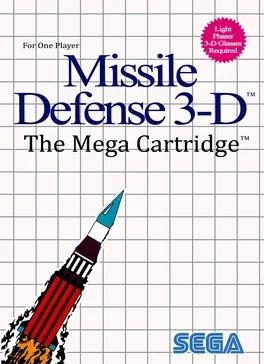
War has been declared between two super powers. At play are real nuclear missiles and the outcome looks dim. If their missiles make contact, there's no chance for survival. Luckily there's hope. You and The Eliminator, the only anti-nuclear laser in operation. Aboard a fugitive space station, you're armed for intervention and your mission is clear: stop all nuclear missiles. But it won't be easy. Because those missiles are being launched at you, too. So play for keeps. This is the most important challenge you may ever face.

Famicom Grand Prix II: 3D Hot Rally is the sequel to Famicom Grand Prix: F-1 Race, although the two games are very different. In a departure from its predecessor, Famicom Grand Prix II features a behind-the-car view. Rather than consisting of a handful of short tracks, 3D Hot Rally provides three long tracks consisting of a variety of different terrain types giving the feel of an actual rally race. As the name implies, the game allows you to use the Famicom 3D System glasses to give the race a real feeling of depth.
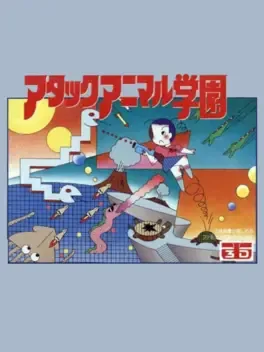
Attack Animal Gakuen is an Action game, developed by Scitron & Art and published by Pony Canyon, which was released in Japan in 1987.
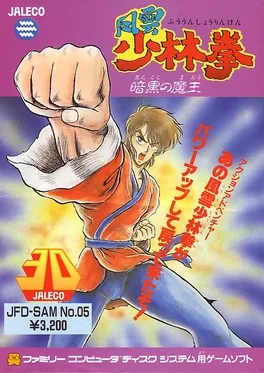
A one-on-one fighting game only released in Japan on April 22nd 1988 for the Famicom Disk System.
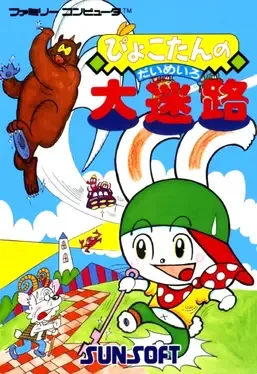
Pyokotan no Daimeiro is an Action game, developed by Japan System Supply and published by SunSoft, which was released in Japan in 1993.
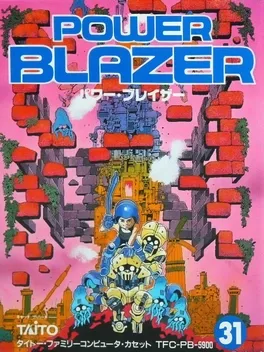
The player takes control of Steve Treiber, a highly trained soldier on a lone mission behind enemy lines. He is the only one capable of taking Brain Master offline and to save the world. Our young hero is armed with a powerful combat-boomerang called the 'Power Blazer'. The game was later westernized as Power Blade.
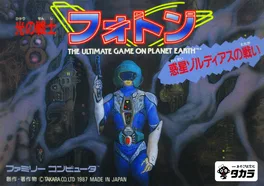
Photon: The Ultimate Game on Planet Earth is an adventure game developed for the Famicom by Takara, and published in 1987. The English name of the game has special significance, since "Photon: The Ultimate Game on Planet Earth" is also the name of the first commercial version of a game commonly known today as Laser Tag. However, besides the name, and the fact that you play a character who fires a Photon gun, any further connection between the live action game and this video game is unknown. In the video game, you play a soldier who must navigate through several different floors of a dungeon which contains items and traps. The player must figure out how to maneuver through the dungeon in an effort to collect various items that will expand his ability to search, and find various disks which contain hints and messages to further aid the player. The game is played from a third-person behind-the-shoulder perspective and contains pseudo-3D visuals. This game was never released outside of Japan.
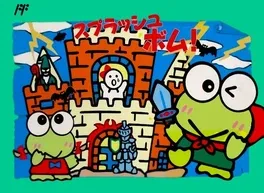
Keroppi to Keroriinu no Splash Bomb! is an Action game, developed by Geo Factory and published by Character Soft, which was released in Japan in 1993.
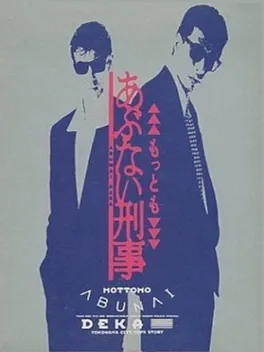
Mottomo Abunai Deka is an Action game, developed by Micronics and published by Toei Animation, which was released in Japan in 1990. It is based on a Japanese movie released in 1989 with the same name. This game and the movie are both related to the late 1980s detective TV show, Abunai Deka.
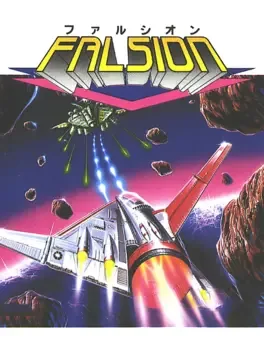
A Konami shoot-em-up depicted from behind the ship on a Z axis, similar to After Burner or Space Harrier, for the Famicom Disk System. It has the distinction of being one of the few games that worked with the Famicom 3D imaging system.