
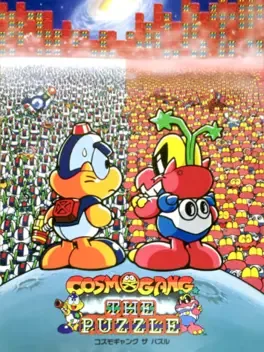
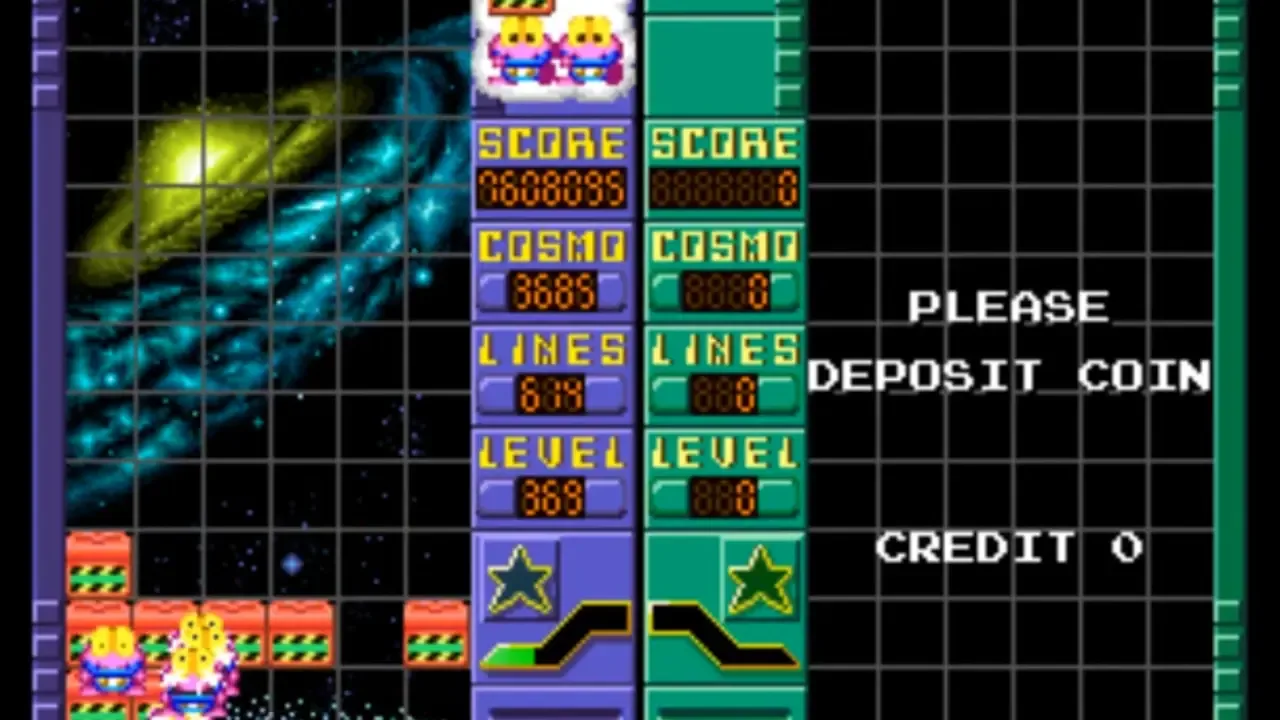
Cosmo Gang the Puzzle


Buy
Part of collection:
Cosmo Gang
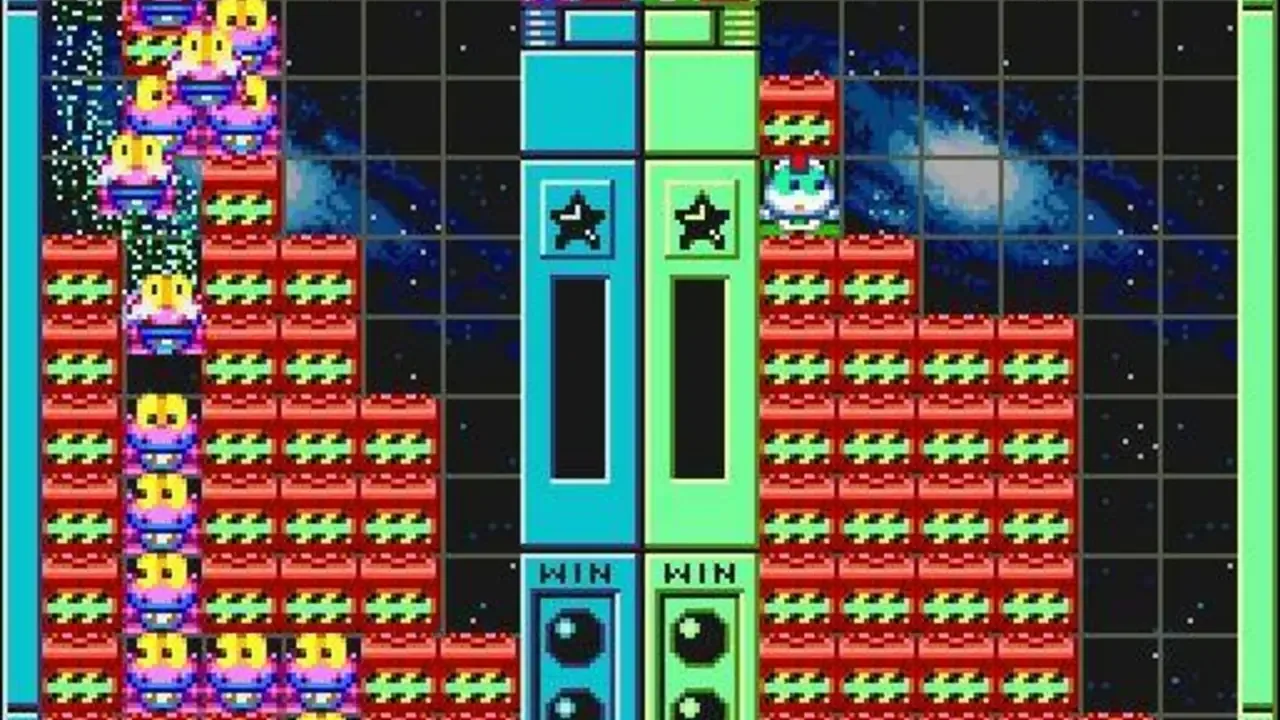
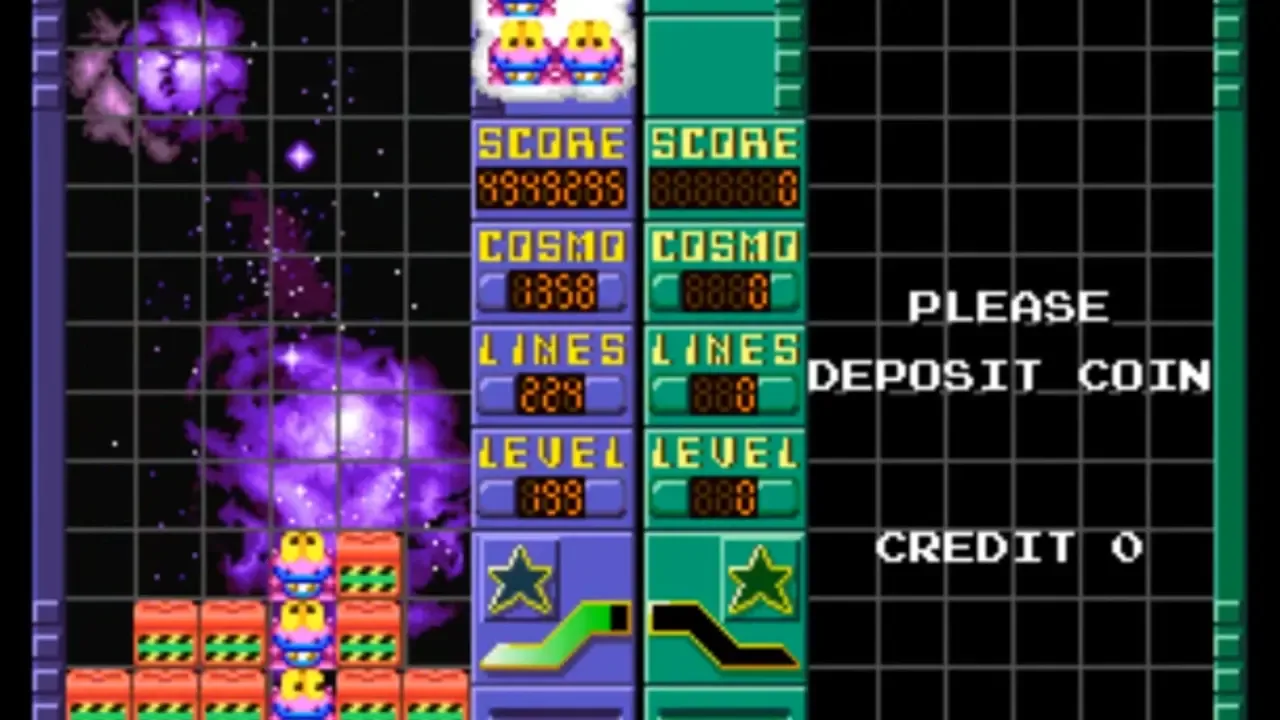
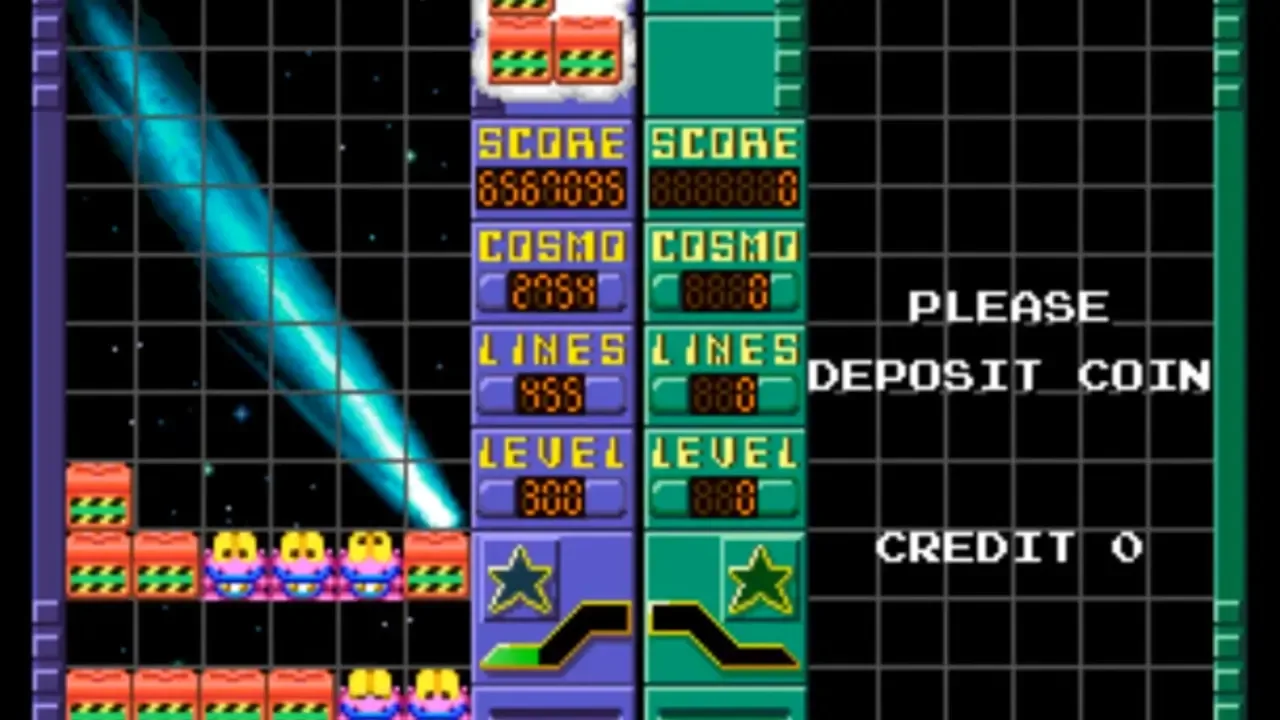
Cosmo Gang the Puzzle, a puzzle game which is similar to Tetris, and became the basis for Pac-Attack.
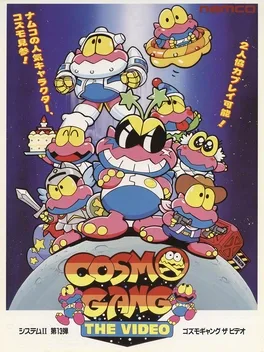
Cosmo Gang the Video is a fixed shooter arcade game based on the redemption game Cosmo Gang.
Could be interesting
There's no waking up from this nightmare! You'll need all your nerve and strategy to get out alive! A dream of giant apples and diamonds goes berserk when they turn into deadly demons raining down on your head! You have to shoot 'em down with a steel ball. Ricochet your shots to knock 'em off in bunches! They're coming fast, and each level is more threatening than the last! Why are those skulls laughing? Shoot first and ask questions later!
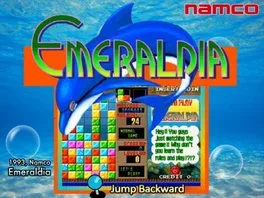
Emeraldia is a puzzle arcade game released by Namco in 1993 only in Japan.
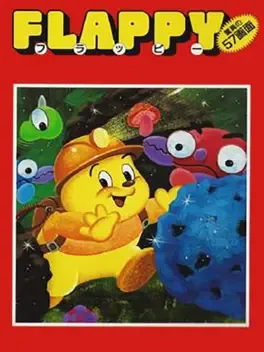
Flappy is a puzzle game by in the same vein as the Eggerland series and Sokoban that is obscure outside Japan. It features Flappy, a somewhat mole-like character who must complete each level by pushing a blue stone from its starting place to the blue tile destination.
Mario's Picross is a puzzle game for the Game Boy and the first game in the Nintendo-published Picross series. In this game, Mario takes on the role of an archaeologist who chisels away the squares in each playfield. The result is a small picture. There are 256 different puzzles to solve, divided into four courses with increasing difficulty level.
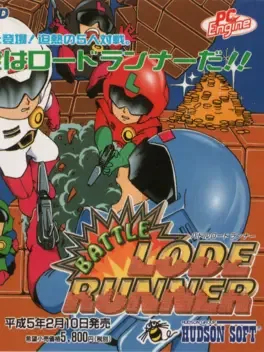
Once an ancient arcade game, and with a previous version on the PC Engine by Pack In Video, Hudson Soft have taken the addictive gameplay of Lode Runner and given the graphics a complete face lift. The puzzle-based action in Lode Runner is simple: You are presented with a side-view platforms-and-ladders based level and you have to collect all the gold and escape without getting caught by the baddies. To defend yourself, you can dig holes in the ground, either to the left or to the right, and enemies stumbling upon them will fall down and be trapped. If you time it right, the hole will re-fill before the enemy can climb out, forcing them to respawn elsewhere in the level. If you prefer evasive action, make sure the coast is clear so you can escape up a ladder or across a well-placed rope, but be warned - they will follow! Once you have collected all the gold, hotfoot it to the nearest long ladder and escape out the top of the screen. In magazine previews, this was originally titled Lode Runner II.
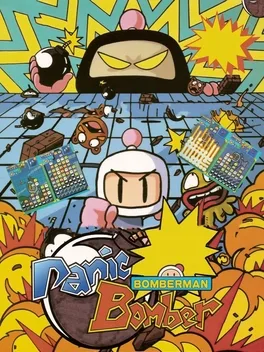
It is a "falling blocks" puzzle game based on the Bomberman franchise. The goal of the game is essentially to cause your opponent to lose by causing their gameplay field to fill to the top with objects. You do this by causing chains of bombs to explode, sending useless rubble over to your opponent's field, which they must then remove themselves. Bombs are earned by causing chains of three identical blocks to disappear. Bombs can only be blown up with an explosion from a lit bomb, which falls from the top of the screen every so often. If the player causes enough damage, they can eventually earn a giant bomb, which will remove a large amount of debris from the playing field, and cause their opponent a good deal of trouble. The game's regular story mode revolves around Bomberman's hunt for the Golden Bomber statue. During his trek, he fights against several different odd characters, like Drifty the balloon, or Cecil the tiger. However, all that can really be earned from playing through this mode is a harder difficulty level, earned by finishing the entire story at the "hard" difficulty level.
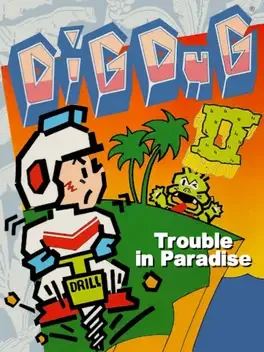
DIG DUG has decided to chill out from the pressures of the real world by taking a long overdue vacation on a beautiful Caribbean island. "At last," he thinks to himself, "sun, sand, surf, and no more hassles from those miserable pests Pooka and Fygar!" Lying in a hammock between the graceful palm trees, he drifts off into a blissful dream of beautiful bikini clad native girls catering to his every wish. But just when he thinks he's got it made in the shade, along come his troublesome enemies to turn his peaceful paradise into a tropical nightmare. Help DIG DUG rid the island of these irritating intruders and bring tranquility back to his vacation by the sea!
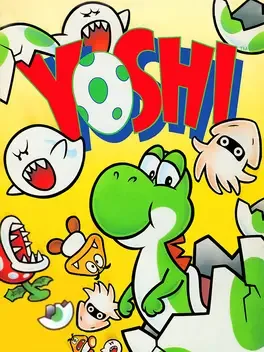
Yoshi is a puzzle game featuring the titular character. In this game, the player must stack two of the same Mario enemy on top of one another to clear them. The concept of the game was inspired by Tetris.
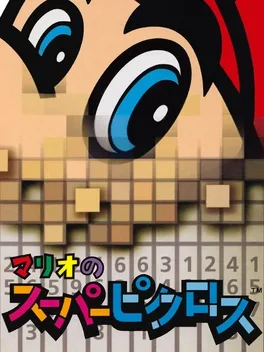
Mario's Super Picross is the first sequel to the Game Boy game, Mario's Picross, and can be played on the Super Famicom. After the commercial failure of Mario's Picross in the West, this sequel was released only in Japan. The game plays much the same way as the first, except Wario appears in it and presents his own set of special rules, which also return in the sequel. Other features includes game-saves, hints and tutorials.
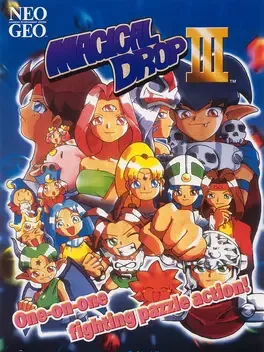
Control a clown to pull in and throw back balloons hurled from the top of the screen. If you line up three or more balloons of the same color in a vertical row, they will burst. If you're not quick enough, the balloons will squash the clown and the game is over. Once you've got the hang of bursting balloons, you'll need to master combos and chains. The third Magical Drop game, first released in 1997, was also developed for the Neo Geo. This games adds representatives for the remaining Tarot Major Arcana, as well as introducing a "daughter" Strength character that more closely resembles the traditional depiction of Strength. The game adds a third button, which allows players to add rows to their field at any time. Additionally, attacks now sends lines to the opponent in non-even rows that vary by character. Hirameki mode is replaced by Adventure Mode, which is a board game that challenges players to reach Empress before CPU-controlled rivals. The English versions of Magical Drop III remove the hardest difficulty setting in Vs. CPU Mode and rival opponents in Adventure Mode.