
Popular games for platform Texas Instruments TI-99
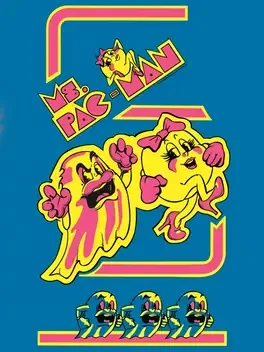
In 1982, a sequel to the incredibly popular Pac-Man was introduced in the form of his girlfriend, Ms. Pac-Man. This sequel continued on the "eat the dots/avoid the ghosts" gameplay of the original game, but added new features to keep the title fresh. Like her boyfriend, Ms. Pac-Man attempts to clear four various and challenging mazes filled with dots and ever-moving bouncing fruit while avoiding Inky, Blinky, Pinky and Sue, each with their own personalities and tactics. One touch from any of these ghosts means a loss of life for Ms. Pac-Man. Ms. Pac-Man can turn the tables on her pursuers by eating one of the four Energizers located within the maze. During this time, the ghosts turn blue, and Ms. Pac-Man can eat them for bonus points. The Energizer power only lasts for a limited amount of time, as the ghost's eyes float back to their center box, and regenerate to chase after Ms. Pac-Man again. Survive a few rounds of gameplay, and the player will be treated to humorous intermissions showing the growing romantic relationship between Pac-Man and Ms. Pac-Man, leading all the way up to the arrival of "Junior".
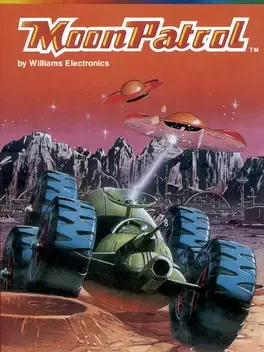
Moon Patrol is a side-scrolling shooter that puts players at the controls of a six-wheeled moon rover that can jump and shoot. The goal is to move through the entire course as quickly as possible while shooting enemies for additional points. Cannons are mounted on the front and top of the vehicle, and both fire simultaneously when the fire button is pressed. Rocks, mines, and pits in the course prevent you from just holding to the right for maximum speed. Rocks and mines can be shot, but pits must be jumped. Some enemies fire shots that create new pits in the course, forcing players to react quickly.
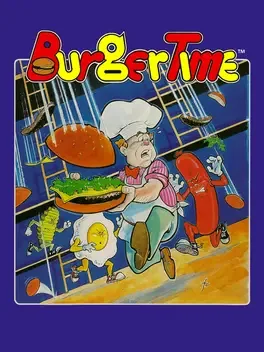
BurgerTime is a 1982 arcade game created by Data East for its DECO Cassette System. The game's original title, Hamburger, was changed to BurgerTime before its introduction to the US. The player is chef Peter Pepper, who must walk over hamburger ingredients located across a maze of platforms while avoiding pursuing characters. The game was popular in arcades. In the US, Data East USA licensed BurgerTime for distribution by Bally Midway. The Data East and Midway versions are distinguished by the manufacturer's name on the title screen and by the marquee and cabinet artworks.
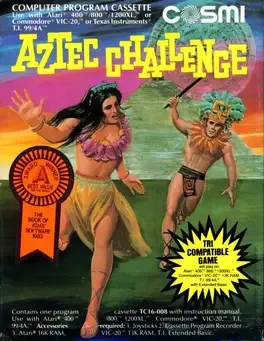
In the Aztec empire you were chosen for sacrifice. A forthcoming violent death you can only escape when a risky obstacle course face - the "Aztec Challenge". But that is no picnic: at the beginning it will be from "all sides" . pelted with spears, while one has to work its almost endless way to the temple Once there it is not friendly: trapdoors, falling boulders, snakes and spiders waiting for new victims. it is a moral imperative and a two-player mode - unfortunately alternate the players then only from. the game features 7 breathtaking levels (plus end bonus), in which a good reactivity is required. The graph corresponds unfortunately only the ordinary 1984, but does not spoil the good game idea. Moreover, good acoustics for the right mood makes. Ideal: one has reached a higher level, you do not have to start again when all lives are exhausted.

The very first racing game with the rear perspective camera and track based on real life.
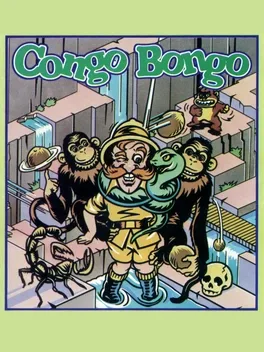
Congo Bongo is an isometric platform arcade game released by Sega in 1983. The game has come to be seen as Sega's answer to the highly successful Donkey Kong game that was released two years prior. The player takes the role of a red-nosed safari hunter who tries to catch an ape named "Bongo". The hunter seeks Bongo to exact revenge for an apparent practical joke in which Bongo set fire to the hunter's tent, giving him a literal "hotfoot". The game was named by Peter W. Gorrie who was the CFO of Sega at that time.
The Hitchhiker’s Guide to the Galaxy is a classic Interactive Fiction game. Though divergent from the source material, the main characters, locations, and concepts are here. Unlike the book, death can come quickly if Arthur fails to observe his surroundings, collect inventory, talk to people, and consult the Guide. Don't panic!

Wishbringer: The Magick Stone of Dreams is an interactive fiction computer game written by Brian Moriarty and published by Infocom in 1985. It was intended to be an easier game to solve than the typical Infocom release and provide a good introduction to interactive fiction for inexperienced players, and was very well received.
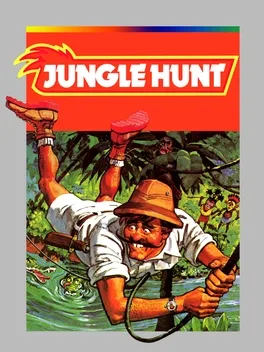
Jungle Hunt is side-scrolling arcade game produced and released by Taito in 1982. It was initially released as Jungle King. Jungle Hunt is one of the first video games to use parallax scrolling. The player controls an unnamed jungle explorer sporting a pith helmet and a safari suit. The player attempts to rescue his girl from a tribe of hungry cannibals by swinging from vine to vine, swimming a crocodile-infested river, jumping over or ducking beneath rolling rocks, then releasing the girl before she is lowered into a boiling cauldron. Home versions were released for the Apple II, Atari 2600, Atari 5200, Atari 8-bit family, Commodore 64, ColecoVision, VIC-20, and IBM PC. The PC version was developed by Sierra On-Line and is incompatible with everything except an original IBM PC/XT with a CGA video card. In the Atari-ported versions the hero is named Sir Dudley, and the girl, married to Sir Dudley, is Lady Penelope.
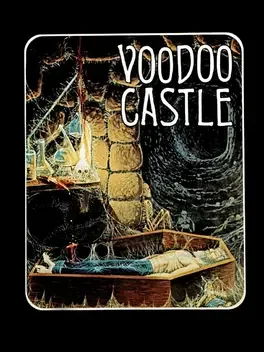
You are Count Cristo and a curse has been put on you. Your have to lift the curse in this text adventure using two word commands.
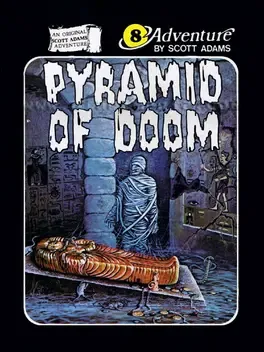
In this text adventure you are on a treasure hunt in an Egyptian pyramid.
Spellbreaker is an interactive fiction computer game written by Dave Lebling and released by Infocom in 1985, the third and final game in the "Enchanter Trilogy". Like most of Infocom's games, it was released for many of the time's popular computer platforms, such as the Commodore 64, Atari ST and Apple II. It is Infocom's eighteenth game. Over the course of events in the trilogy's earlier games from 956 to 957 GUE (Enchanter and Sorcerer), the player's character has progressed from a novice wizard possessing a few weak spells to the leader of the Circle of Enchanters. Now, in 966 GUE (ten years after the events of Enchanter), the very foundations of Magic itself seem to be failing, and the leaders of all the Guilds in the land have gathered to demand answers. In the midst of this impassioned meeting, the crowd is suddenly transformed into a group of toads and newts. Everyone present is affected except for the player and a shadowy figure who flees the hall.
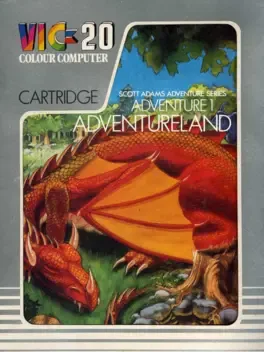
A text based Adventure Game for the TRS-80, later enhanced with visual scenes in various ports. Only allowed 2-Word input and was largely based on Colossal Cave Adventure.
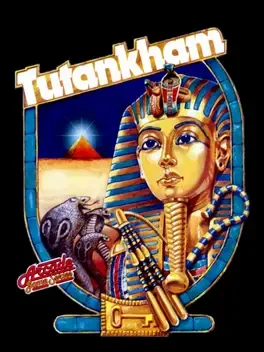
Tutankham is a combination of the maze, action and shoot 'em up genres. Taking on the role of an explorer grave robbing Tutankhamun's tomb, the player is chased by creatures such as asps, vultures, parrots, bats, dragons, and even curses, all that kill the player on contact. The explorer can fight back by firing lasers at the creatures, but he can only cover the left and right directions. The player is also endowed with a single screen-clearing "flash bomb" per level or life. Finally, each level has warp zones that teleport the player around the level, which enemies cannot use. To progress, the player collects keys open locked doors throughout the levels, searching for the large exit door. Optional treasures can be picked-up for bonus points. Each level has a timer; when it reaches zero the explorer can no longer fire lasers, and once a level is cleared the remaining time is converted to bonus points.
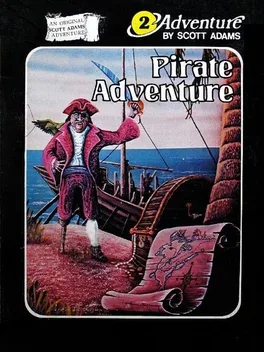
Your goal in this text adventure is to find a pirate treasure using two word commands.
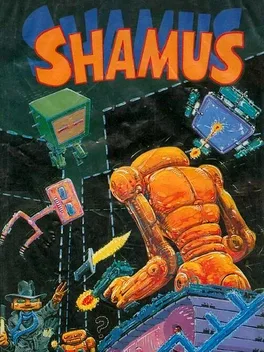
Shamus is a shooter with light action-adventure game elements written by Cathryn Mataga and published by Synapse Software. The original Atari 8-bit computer version was released on disk and tape in 1982. According to Synapse co-founder Ihor Wolosenko, Shamus made the company famous by giving it a reputation for quality. "Funeral March of a Marionette", the theme song from Alfred Hitchcock Presents, plays on the title screen.

TI-99 Platformer
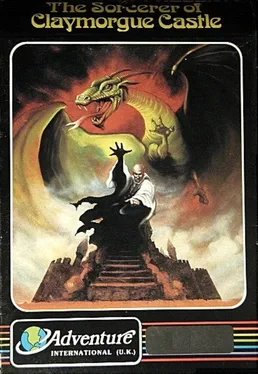
You are the sorcerer apprentice of Solon and have to retrieve thirteen Stars of Power for you master from Castle Claymorgue.
TI-99 version of hangman
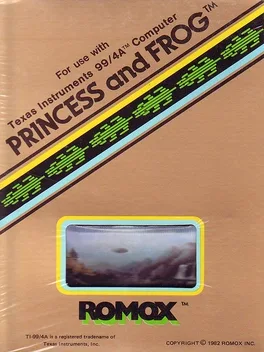
This take on Frogger features music and speech. In this variation, you are a frog trying to get to the princess's castle. You must first cross a road filled with jousting knights on horseback. You must then cross the moat, filled with snakes and alligators. The alligators will submerge, drowning your frog if he's riding on that alligator's back. If you make it safely, you become a handsome prince.
TI-99 Port.

Super Smash Bros. Open is an unofficial demake of Super Smash Bros. designed for TI-83 series calculators. The game is heavily based around Super Smash Bros. Melee.

This adventure takes place in a nuclear power plant and using two word commands you must prevent a reactor meltdown.
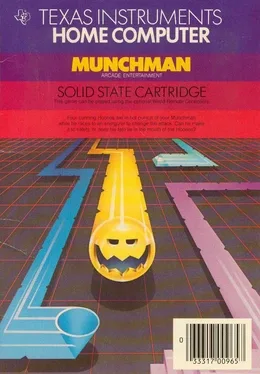
Munch Man is a video game written by Jim Dramis for the Texas Instruments TI-99/4A home computer and published as a cartridge by Texas Instruments in 1982. Based on Namco's Pac-Man, Munch Man includes several variations that alter and enhance gameplay. Dramis later wrote Parsec for the TI-99/4A. The player controls the Munch Man using either the keyboard or joystick. Like Pac-Man, the goal of a level is to visit every part of the maze, but instead of eating dots the player fills the maze with a chain pattern. Four Hoonos (the equivalent of Pac-Man ghosts) attempt to thwart Munch Man's efforts to complete his mission. However, Munch Man always has his "Energizer" (the equivalent of a Pac-Man power pill) which gives Munch Man the ability to devour the Hoonos. The game ends when the player's lives are depleted. In level 20, 40, and 60, the maze is invisible and there are no chains. Instead, Munch Man must eat all the TI logos in the invisible maze. This gives the odd effect of showcasing the maze at first, but slowly hiding the maze as the player removes the indications of the maze paths by eating the TI logos.