
Popular games for platform NEC PC-6000 Series
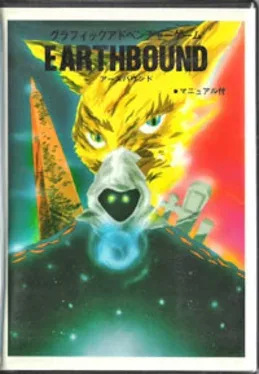
Unrelated to the popular SNES RPG, Earthbound is an adventure game developed by Xtalsoft in 1983.
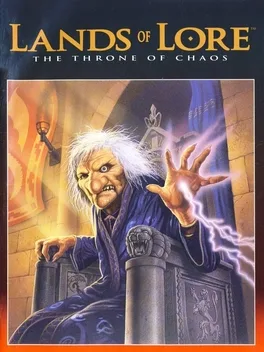
Lands of Lore: The Throne of Chaos takes you on an adventure: save the dying king and stop the evil sorceress Scotia’s Dark Army. Your band of heroes will travel through a vast fantasy word full of mysterious places, dangerous monsters, and hidden treasures in a quest to find a way to defeat the immortal evil enchantress and save the world.
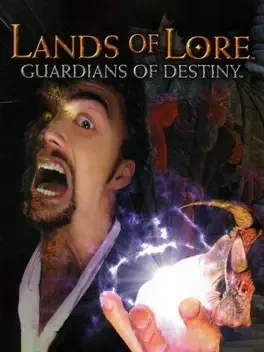
In Lands of Lore: Guardians of Destiny you enter a world of intense beauty and mortal danger where your slightest move can trigger cataclysmic events, miraculous escapes, or lethal battles. See magical cities rise out of great oceans. Enter the musty caverns of Dracoid ruins. Discover gruesome altars and witness secret ceremonies never before seen by humans.
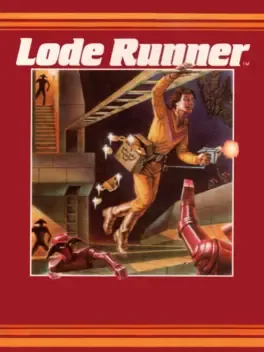
Lode Runner is a 1983 puzzle video game, first published by Brøderbund. It is one of the first games to include a level editor, a feature that allows players to create their own levels for the game. This feature bolstered the game's popularity, as magazines such as Computer Gaming World held contests to see who could build the best level.
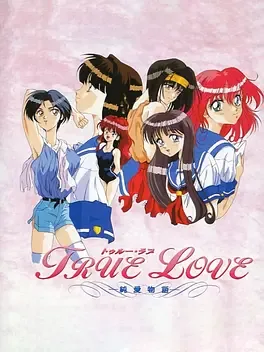
True Love is a Japanese bishoujo eroge visual novel with dating sim and adventure game elements released in 1995 which was later localized in Europe by Otaku Publishing and distributed in North America by JAST USA in 1999.
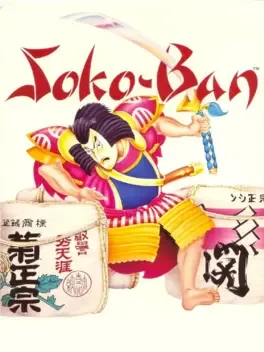
Sokoban ("warehouse keeper") is a is a classic puzzle game created in 1981 by Hiroyuki Imabayashi, and published in 1982 by Thinking Rabbit, a software house based in Takarazuka, Japan. In 1984 the ASCII Corporation published a version produced by Khaled Bentebal. It was the basis of numerous clones in the later years. It is set in a warehouse. On each level, the player must push crates (from square to square) to get them onto designated spots; once each crate is on a marked spot, the level is complete. Crates can only be pushed one at a time (so two crates next to each other cannot be pushed together), and cannot be pulled--so it's possible to get a crate stuck in a corner, where it cannot be retrieved! By the last levels, you must plan 40 steps in advance.
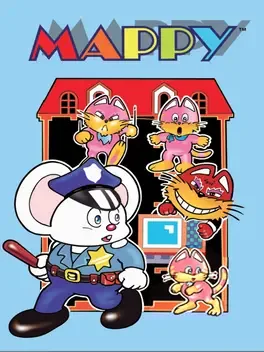
The player guides Mappy the police mouse through the mansion of the cats called Mewkies (Meowky in the U.S. version) to retrieve stolen goods. The player uses a left-right joystick to move Mappy and a single button to operate doors. The mansion has six floors of hallways in which the stolen items are stashed.
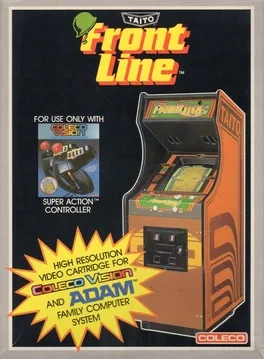
Front Line is a vertically scrolling action game. Your mission is to infiltrate enemy territory and destroy their fortress. To reach the fortress, you will have to make your way through varied and dangerous terrain. Jungles, deserts, brush, and rocks all slow your progress, plus each area has numerous enemy fighters and tanks trying to stop you. To help get past these obstacles, you are armed with a machine gun and grenades; at some points in the game you may even come across an abandoned tank which you can control to increase your odds of survival. When you reach the end of the level and successfully destroy the fortress, the game will repeat at a higher level of difficulty. Gameplay is for one or two players, and four different skill levels are available.
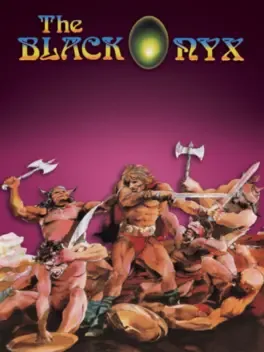
The Black Onyx is a role-playing game developed by Bullet Proof Software. It was released, among other consoles and computers, for the SG-1000 in 1987. It was the last SG-1000 game to be released in card form, and the last to be published by Sega, but it is currently unknown as to whether it was the last SG-1000 game. MSX and PC-8801 versions had been released in 1983 and 1984, respectively, meaning this version is unusually late. The game was followed by The Black Onyx II: Search For The Fire Crystal, which saw its original MSX release in 1984.
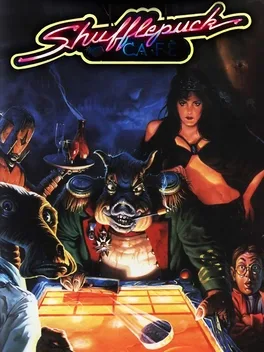
Shufflepuck Café is a computer air hockey game developed by Christopher Gross, Gene Portwood and Lauren Elliott for Brøderbund. There are two game modes. The player can compete in a tournament, playing against opponents who visit the Café, or can practice against each opponent to find out his/her/its weakness in a single-player match. There is a general storyline behind the Amiga version of the game in which the player is an inter-galactic salesman whose spaceship has broken down. He needs to find a telephone to call the breakdown service and get the spaceship fixed. Shufflepuck Café is the nearest place for miles, so he goes in to use their telephone. The main eight Shufflepuck players are standing in his way and will not let him get to the phone until he has beaten them all. Once all are defeated, the player gets in his spaceship and flies off into the distance.
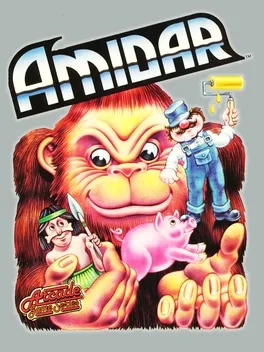
Amidar is an arcade game programmed by Konami and published in 1981 by Stern. Its basic format is similar to that of Pac-Man: the player moves around a fixed rectilinear lattice, attempting to visit each location on the board while avoiding the enemies. When each spot has been visited, the player moves to the next level. The game and its name have their roots in the Japanese lot drawing game Amidakuji. The bonus level in Amidar is a nearly exact replication of an Amidakuji game and the way the enemies move conform to the Amidakuji rules - this is referred to in the attract sequence as 'Amidar movement'. A version for the BBC Micro was created but never released.

Nuts & Milk is a platform-style puzzle game developed and published by Japanese software developer Hudson Soft in 1983. The game was released initially on the FM-7, MSX, NEC PC-8801, NEC PC-6001, and later to the Famicom in Japan. It was the first third party video game to be released on a Nintendo console.
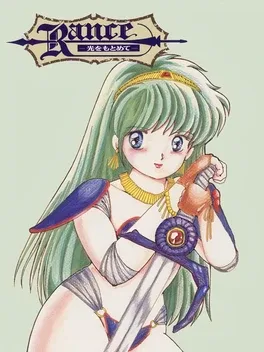
Rance: Hikari Quest is an exploration game in which you play as Rance as he takes on the mission to go and save Hikari, a girl who has been kidnapped.
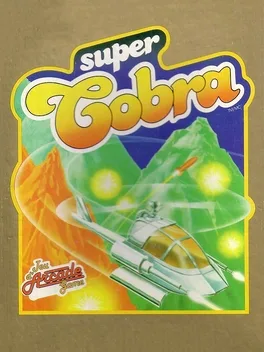
You're a helicopter gunship pilot on a daring and dangerous mission: air surveillance of enemy territory. Success depends on how far you can penetrate enemy airspace. Can you handle the pressure? Because the further you go, the more difficult the mission becomes. Show that you've got what it takes by maneuvering your chopper around craggy mountain peaks, through deep dark tunnels, and over tall city buildings. All while you face enemy tanks and missiles and weird sky-flying weapons. But you can fight back with high-flying, quick-thinking, fast-reaction moves. Good luck and good flying!

Tutankham is a combination of the maze, action and shoot 'em up genres. Taking on the role of an explorer grave robbing Tutankhamun's tomb, the player is chased by creatures such as asps, vultures, parrots, bats, dragons, and even curses, all that kill the player on contact. The explorer can fight back by firing lasers at the creatures, but he can only cover the left and right directions. The player is also endowed with a single screen-clearing "flash bomb" per level or life. Finally, each level has warp zones that teleport the player around the level, which enemies cannot use. To progress, the player collects keys open locked doors throughout the levels, searching for the large exit door. Optional treasures can be picked-up for bonus points. Each level has a timer; when it reaches zero the explorer can no longer fire lasers, and once a level is cleared the remaining time is converted to bonus points.
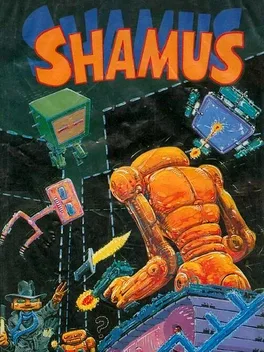
Shamus is a shooter with light action-adventure game elements written by Cathryn Mataga and published by Synapse Software. The original Atari 8-bit computer version was released on disk and tape in 1982. According to Synapse co-founder Ihor Wolosenko, Shamus made the company famous by giving it a reputation for quality. "Funeral March of a Marionette", the theme song from Alfred Hitchcock Presents, plays on the title screen.

An evil demon named Varalys casts a curse upon the princess Ann, turning her into three fairies. You control Sir Jim and set out to find the fairies, and then slay Varalys. Only by vanquishing Varalys can the curse be lifted. Once the princess is restored the kingdom will be saved. The fighting is a little more in-depth than hack and slash. You can either fight with a defensive or offensive stance, or you can use magic spells.
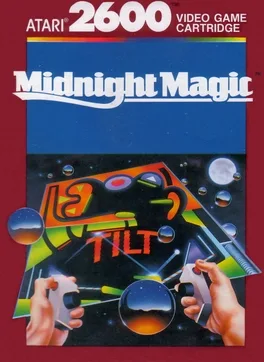
Midnight Magic utilized the Atari 2600 joystick for performing simulated pinball functions, such as activating the flippers and shooting the ball. Moving the joystick controller down pulls the pinball machine plunger back while pressing the joystick button shoots the ball into the playfield. The left and right flippers are activated by moving the joystick controller left or right. Hitting all five drop targets at the top of the table increases the bonus multiplier (2x, 3x, and so on). Extra balls can be earned when hitting the rollover targets at the top left and right corners of the table when the bonus multiplier is activated.
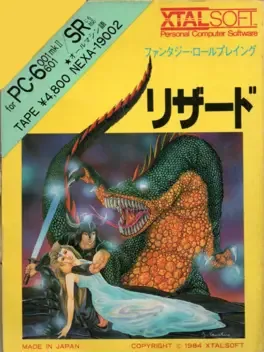
Japanese RPG
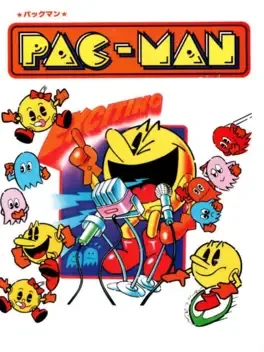
The PC-6001 port of Pac-Man.
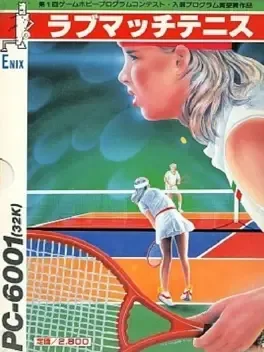
Lover Match Tennis is a tennis game where you play as a first-year tennis girl who gets to challenge one of three seniors: Maiko a junior, Kumiko a second year, and finally Jun-Kun a third year is the toughest out of the other two. You must knock the ball in because if it's out then the opponent gets the points, or you can still earn points depending on how long you prevent the ball from going out. The game ends when your opponent gets all 4 wins.
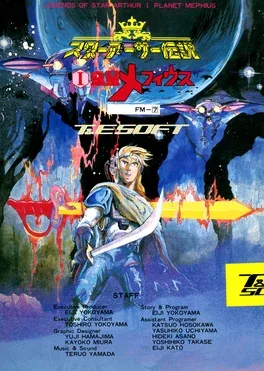
In the year 3826, the Galactic Federation is at war with Jamil, an enemy from outer space, and unarmed planets are being destroyed one after another by Jamil's vicious fleet. Meanwhile, Star Arthur Mirvac descends on the planet Mephius in search of the legendary sword Raysword to crush Jamil's ambitions... This game is known for being a very early adventure game, and for releasing on three cassette tapes. It uses a both kana command input and cursor selection.
It is a semi-real-time adventure game developed in 1983. It was released by MIA under the title “ONION HOUSE”, although it was originally known during development as “Circumference.” The game features a distinctive system that combines the command-based adventure game format popular at the time with real-time action elements. It is characterized by a high level of difficulty and complex puzzles, and has been regarded as a title that divided opinions since its release. The game was distributed on cassette tape. Its original retail price was 980 yen. The supported platform is the PC-6001.