
Popular games for platform Game & Watch
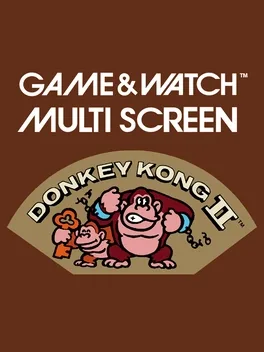
Donkey Kong II was developed by Nintendo R&D1 and released as part of the Game & Watch Multi Screen series, featuring two LCD screens. It was released in 1983. Donkey Kong Jr. has to touch a key, then it moves up to the top screen. Donkey Kong Jr. has to climb to the top screen while avoiding things such as electrical wires. When he gets to the top screen, Donkey Kong Jr. will have to touch the key again, and it will move to the keyhole of one of the chains. Donkey Kong Jr has to climb up the rope below the keyhole, while avoiding birds. When he gets to the top of the rope, one of the chains will unlock. He has to do this 4 times until he saves Donkey Kong. After that, the game will start over, at a somewhat faster pace.
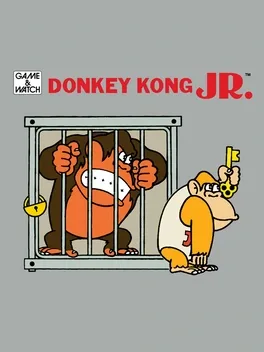
The first Game & Watch version of Donkey Kong Jr. is the first game in the New Wide Screen series. It is a single-screen single-player game.
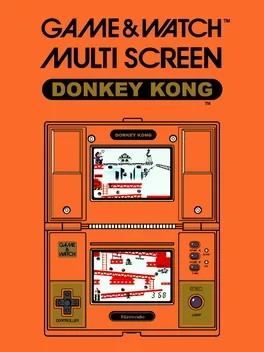
Donkey Kong is a Multi Screen Game & Watch game released in 1982. It was based on the arcade game Donkey Kong, with gameplay based only on 25m, the first stage from the arcade version. This was the first Game and Watch game to be based on pre-existing Nintendo characters, and it was the first video game system to include the D-pad, a feature of all future Nintendo systems. The game unit's model is DK-52, with the DK standing for Donkey Kong. The game was a huge success, selling over 1,000,000 copies worldwide.
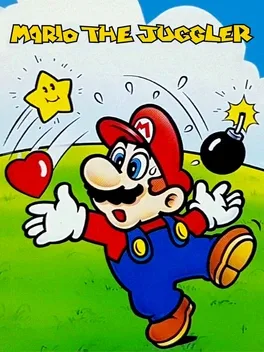
Mario the Juggler is a Game & Watch reworked version of 1980's Ball, with Mario themes replacing the original's generic juggler and his balls. It was the final Game & Watch ever released. The goal of the game is to keep juggling balls, bombs, stars, hearts, and other iconic Mario objects.
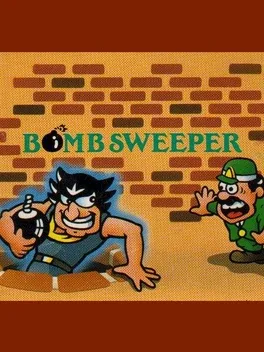
Bombsweeper was a multi-screen Game & Watch video game released in June of 1987. The game was never released in Japan. The game's model number was BD-62. Using the D-pad to move John Solver, you must reach at least one of the bombs hidden in the walls to clear the screen and receive a bonus for the time remaining. The only obstacles in your path are the walls, which you must either maneuver around or push them along provided there is no obstruction in the way. Some levels are a test of speed, others are a test of logic and intelligence.
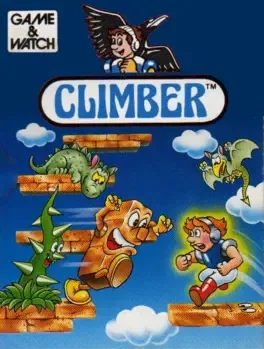
Climber is a Game & Watch video game released in the Crystal Screen format in 1986 and the New Wide Screen format in 1988. The game was never released in Japan, and an estimated 250,000 of the New Wide Screen version were produced by Nintendo. The model number for the Crystal Screen version is DR-802, while the model number for the New Wide Screen game is DR-106. Some speculate that the game is based on the Ice Climber NES game, though this is unconfirmed. In Climber, you are a child known as Climber who, with the help of Lord Meiji's teachings, jumps across platforms trying to get to the top of Block Mountain while avoiding enemies and platforms that move. The enemies are the Blockmen, which walk and turn into block platforms when they reach a gap; Eyerom, birds that fly and get in the Climber's way; and thorny plants, which are obstacles in the way of Climber's movements. In each set of 5 levels, the first 4 ends with a bonus game where Climber has 2 chances to time his jump to catch Hentori, the bonus bird. On the fifth level, Climber must jump and grab the sword at the correct time to stab and defeat Dragalo the dragon.
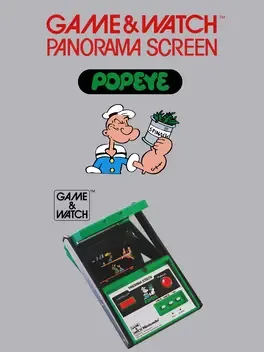
The Panorama Screen version of Game & Watch Popeye. It is a different game from the Wide Screen series Popeye.
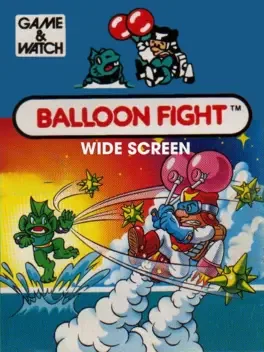
The New Wide Screen version of Balloon Fight for the Game and Watch. The game is similar to the NES classic Balloon Fight, particularly its Balloon Trip mode. The model number for the original version is BF-803, while the model number for the New Wide Screen version is BF-107. The BF in the model numbers stands for Balloon Fight.
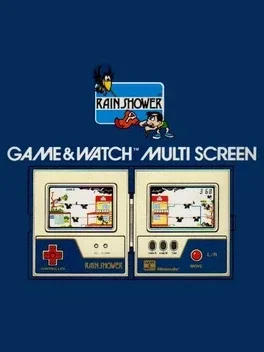
Rain Shower is a multiscreen Game & Watch video game released in 1983. It was released in 1983 and Nintendo reportedly made an estimated 250,000 units worldwide. In the game, your clothes are hanging up to dry outside, but it's about to rain, and you have to make sure your clothes don't get wet. The rain comes down in segments, so you can move the wire from left to right to make sure the segment of rain that's coming down don't get onto your clothes. In Game & Watch Gallery 4 for the Game Boy Advance the original game plus a new version that features Mario characters. There are two floors, with each floor having a clothes line on the left and the right. In the beginning of a game a cloud will generate over the character's house, and rain drops will start to fall. The character will then have to go up to the second floor and move the line so that the rain doesn't drop on the clothes. He'll then have to go to the main floor and change the positioning of the clothes down there until the water hits the ground.
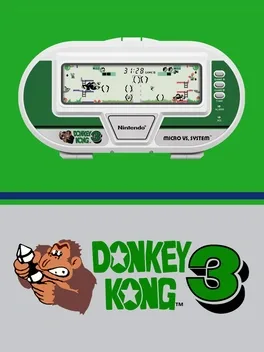
Donkey Kong 3 is a Micro VS. Game & Watch video game released in 1984 by Nintendo. It is one of three multiplayer Game & Watch video games. The model number for Donkey Kong 3 is AK-302, with the AK standing for Attack Kong. The game, while bearing the same title, is entirely different from the arcade game Donkey Kong 3. In this game, one player will control Stanley, and the other will control Donkey Kong. Nintendo manufactured 250,000 units of the game worldwide.
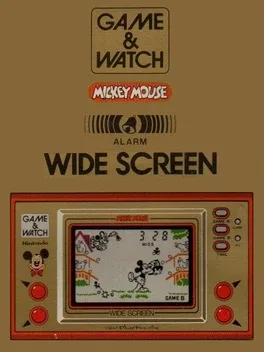
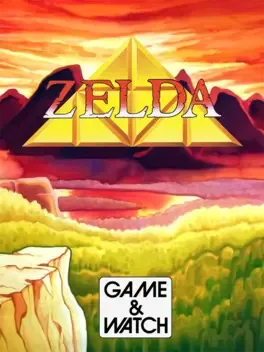
Zelda is a multiscreen Game & Watch game that was only released in English as a stand-alone system pre-loaded with the single game. It has dual screens which fold in a clamshell design, similar to the Nintendo DS. It was re-released as part of the Nintendo Mini Classics line in 1998 and 2007. The complete game can also be unlocked in Game & Watch Gallery 4 for the Game Boy Advance and Wii U Virtual Console. Its core formula is based on that of the original The Legend of Zelda, where Link must fight through eight dungeons and obtain the eight shards of the Triforce of Wisdom. However, it bears more gameplay similarities to The Adventure of Link, since it is 2D and from a side-on perspective. The game features an original, though minimal storyline.
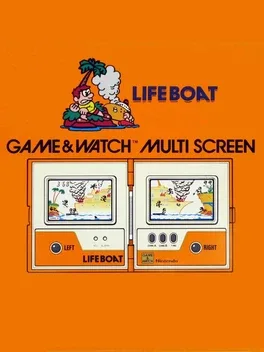
Lifeboat is a multi-screen Game & Watch video game released in 1983. Nintendo produced an estimated 500,000 units worldwide. The model number for the game was TC-58. In the game, you'll have to maneuver two lifeboats and catch people who are jumping out of a ship on fire. The game was held similarly to how you would hold a book.
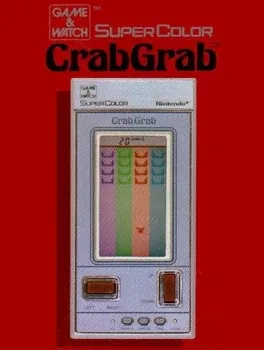
Crab Grab is a Super Color Game & Watch video game released in 1984. It's model number is UD-202. In the game, crabs are moving towards your character. You must push them away and not let them pinch you. If three crabs pinch you, then it'll result in a game over, and you'll have to start over. There are four columns, each a different color (from left to right: purple, green, orange, and blue). The crabs will start to come from the top, and you'll have to move your character from left to right to push them away, though more and more will always come. The game was one of two Super Color games, the other being Spitball Sparky.

Donkey Kong Hockey is one of the few two-player Game & Watch games ever manufactured. It was released as a part of the Micro Vs. series. Donkey Kong and Mario must engage each other in a two-player game of ice hockey. The game is colorless, being set up on a small LCD screen. The console is an elliptical shape, while the controllers are small and circular; the console can open up to store the controllers.
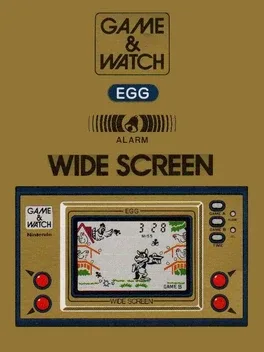
Egg is a Game & Watch video game released in 1981. The game was similar to the previously released Mickey Mouse game, though due to copyright issues which prevented them from using the brand in some countries, they replaced Mickey Mouse with a wolf, though the gameplay remains essentially the same. The countries where Mickey Mouse was replaced by Egg include some Asian countries and Australia. In the Soviet Union there were the wolf and the hare from Soviet animated TV series Nu, Pogodi!. Egg was never released in Japan. Within the box were LR43 batteries, a caution leaflet, and battery stickers. The game sold an estimated 250,000 units worldwide. The game's model number is EG-26. Interestingly, Egg was included in the Game Boy Color video game Game & Watch Gallery 3 in 1999.
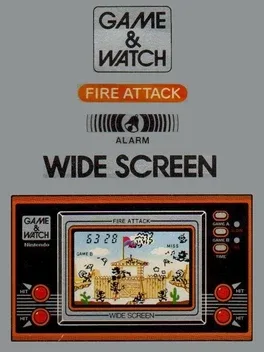
The Game & Watch game Fire Attack, released March 26, 1982, was a game where your character is a civil war-looking general, trying to defend his fort from an onslaught of Native Americans attacking with flaming torches.
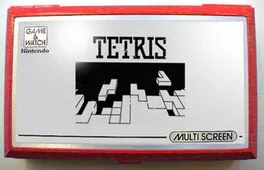
Tetris is a canceled Multi Screen Game & Watch. The game was supposed to be based on the Tetris series.
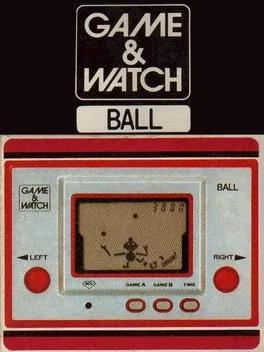
Ball (originally known as Toss-Up in North America) is a Game & Watch game released as a part of the Silver series on April 28, 1980. It was the first Game & Watch game. It is a single-screen single-player Game & Watch. In Game A, the player tosses two balls in the air. As the balls fall, the player must catch and toss them up again. One point is earned for each successful catch. A dropped ball will display a broken ball and end the game. The object is to continuously catch the balls that fall and throw them back up, as in juggling. In Game B, the player must juggle three balls, and each successful catch rewards ten points instead of one.
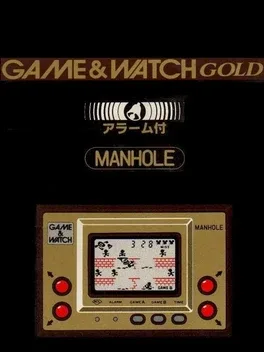
Manhole is a Game & Watch game. In the game, you must save pedestrians from falling into manholes by covering them up. If one falls through, you will lose and will have to start over.
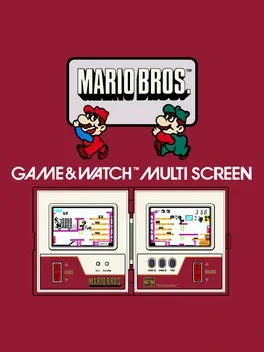
Mario Bros. is a title for the Game & Watch. Despite its name, it has no similarity to the arcade game Mario Bros. Instead of plumbing, Mario and Luigi are working at a bottling factory and must prepare packages of bottles to load onto a delivery truck. This game, played on the Multi Screen model of the Game & Watch, a few months before the much more popular arcade title, making it the first game to feature Luigi.
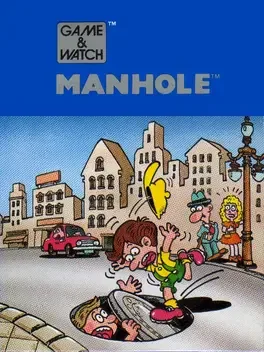
The New Wide Screen version of Game & Watch Manhole.
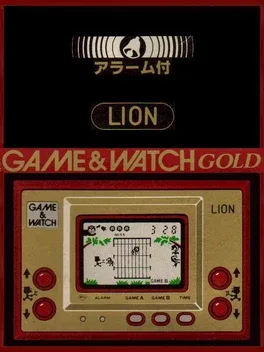
Lion is a Game & Watch game and the last game in the G&W Gold series. In the game, you control two lion tamers and try to keep the lions in the cage. If one of the lions escape, you will lose and will have to restart.
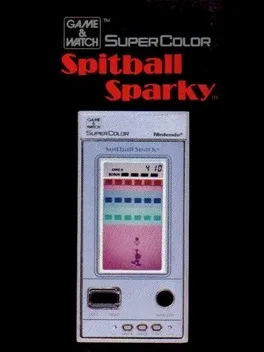
Spitball Sparky is a Super Color Game & Watch game released in 1984 by Nintendo. The game's model number was BU-201, and the contents within the box included the game, LR44 batteries, a caution leaflet, a how to play leaflet, and battery stickers. The game is very similar to the arcade classic Arcanoid and has colors due to the layers of colored plastic overlay. Your goal is to spit on the ball so that it'll go back up and destroy the blocks at the top. The unit was rectangular and silver. When Nintendo of America released the game in America, they made artwork for the game that had a more detailed character.