
True Love Story F - Fan Disc
Buy
Part of collection:
True Love Story
(last 3 games)
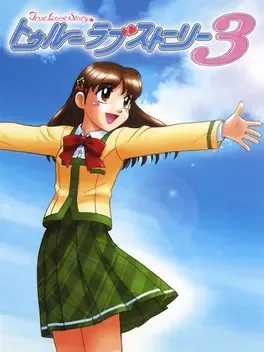
True Love Story 3 follows a male protagonist in his third year of junior high as he aims to confess his love, particularly to his longtime crush, Aotsuki Takane, whom he's introduced to by his twin sister, Kaname. The game stands out for its high interactivity, with frequent repeated stock dialogues. Players track characters’ friendship and affection levels using a triangular chart, which they can check through Kaname. Instead of playing every day, players choose specific “try-your-best days,” which impact enthusiasm and event frequency. Its most unique feature is the detailed conversation system. On sunny weekdays, the player can attempt to walk home with a girl, triggering a complex dialogue mini-game. The goal is to raise her "heartthrob gauge" without overloading her pounding heart, and possibly score a date.
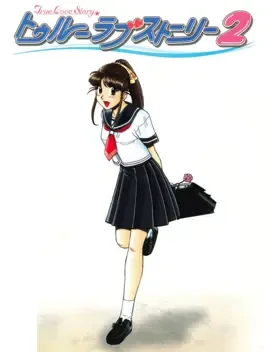
Each of the three discs is available for the first, second and third semesters, and you can play through to the end of the game without having to replace the disc. Each semester, the characters, events and opening movies are different versions. It is a sequel that continues the concept of the previous work and attempts to enrich the content. The player becomes a second-year student at Aobadai High School and aims to create a girlfriend in about a month before transferring to another school. The theme is "preciousness". At the start of the play, you select three keywords, the semester, the main character's ability tendency. The ability tendency is linked with the preference of the target character, and changes the rising curve of appearance event, friendliness and admiration. Keywords can be used as your favorite topic when you have a conversation on your way home from school, and their response also changes depending on your partner's preference.
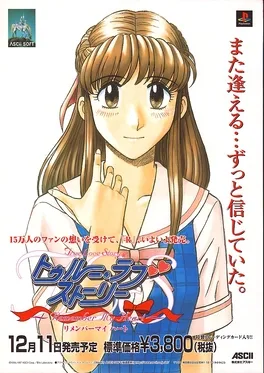
The game is largely similar to True Love Story. For each character, we increased the number of date events from two to three per season. Ordinary events have also been added, such as adding voice actors to male students and allowing them to go home with the protagonist's younger sister Misaki. The opening movie has been changed along with the change of the theme song.
Could be interesting
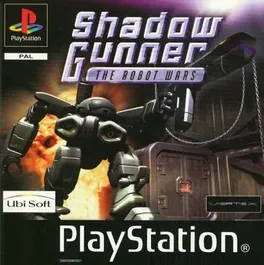
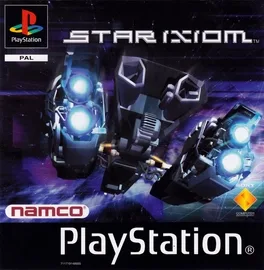
In a hellish mechanical future, the latest generation of robots are fighting a self-destructive war of attrition. Command your war machine in the hyper realistic 3D worlds. Power up your weapons. 15 missions and only one way to survive: destroy the enemy.
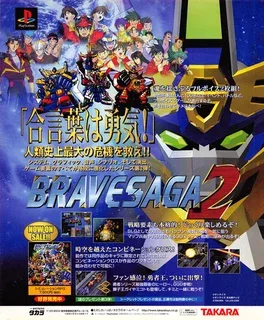
Brave Saga 2 is the sequel to Shin Sedai Robot Senki - Brave Saga. Brave Saga 2 can be considered a final re-tale of the Yuusha series as it features virtually all Yuusha characters, mecha and human alike, from the previous generation.
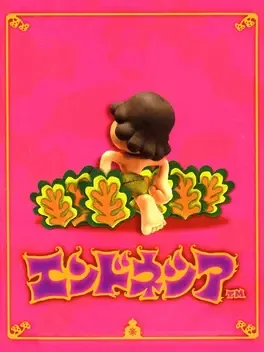
In Endonesia, the player takes the role of a boy who went into the park and suddenly found himself in another world. A mysterious voice contacts him and says that this world is called Endonesia, and if he wants to return home, he has to call upon its fifty gods. In order to find the gods, the hero has to communicate with the inhabitants of Endnesia by transferring his own emotions to others. Created by Taro Kudo and Kazuyuki Kurashima of Love-de-lic fame, Endnesia is one of the spiritual descendants (along with Giftpia and Chulip) of their seminal game Moon: Remix RPG Adventure. Like those other games, Endnesia is a puzzle-solving adventure with RPG elements such as statistics, item-gathering, and character growth. The theme of the game is sharing emotions; gameplay-wise, it translates into puzzle-solving which involves using the right emotion on the right characters at the right time. For example, using the Hunger emotion on an animal will make it hungry, urging it to find food, which will clear the path for the hero. Similarly to Moon and its descendants, Endnesia has a day-night cycle. The hero's health meter is depleted due to exhaustion; though the game's world is quite large, the player always has a time limit for his daily activities. The player should also feed the hero; hunger makes his vision blurry and slows down his pace.
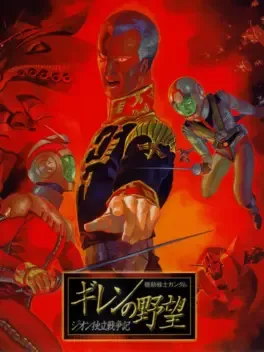
War for Zeon Independence adds an updated map system and military system to a rewritten script, several new characters, an updated spying system and Mobile Suits from MSV. The battles are fought in full 3D, unlike previous titles in the series. However, this installment omits the Zeta Gundam era conflicts featured in Blood of Zeon. As a result, the Principality of Zeon and the Earth Federation are the only factions featured in this entry. However, after completion of the game with each team, an option to use them in IF mode is unlocked. Each completion of the game increases the player's "IF" Level and more points to use in IF Mode. IF Mode allows the player to create their own team; Choosing such options as a leader (or creating their own leader), Their home base, which officers to start with, which technology group their faction is in and what units the player starts with. This also comes with a variety of Scenarioes to play through, with preset IF modes.
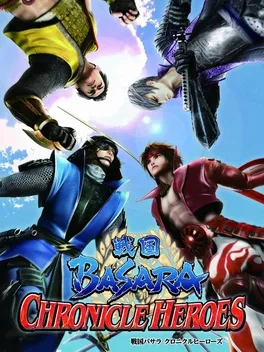
Sengoku BASARA Chronicle Heroes is a PlayStation Portable game released by Capcom on July 14, 2011. The game is similar to the previous PSP release Sengoku Basara: Battle Heroes. Gamers create a team consisting of two heroes from the series and face off in battle against another player. The game will support up to four players ad hoc. This game feature characters from Sengoku Basara: Samurai Heroes (called Sengoku Basara 3 in Japan) like Ishida Mitsunari and the revamped Tokugawa Ieyasu. Token Sengoku Basara characters Date Masamune and Sanada Yukimura return as playable characters. New stages include a different take on a section in Sekigahara from Sengoku BASARA: Samurai Heroes. The PSP version will have height differences, which means that battles will also be taken above ground. Speaking of which, the game will now feature new aerial combat elements due to fan request. Characters can now pull off combos while in mid-jump.
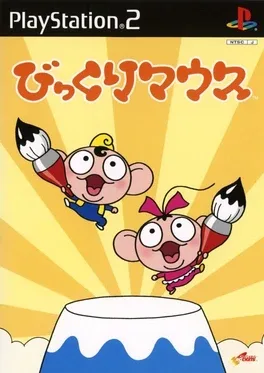
The first PS2 mouse-compatible software. The game may look like another graphic/paint tool software, but it is more of a freestyle drawing software with games. It does not feature zooming capabilities, or let players draw pixel-by-pixels. It only uses 12 colors, and lets players select different types of canvas. Aside from normal pens, there are pens that draw pictures for players. For example, a circle drawn with a black pen may become a black tire, or a circle drawn with a blue pen may become a puddle of water, and a circle drawn with a yellow pen may become a full moon. Other canvases are more like mini-games, where the player will need to draw a frying pan to catch eggs thrown by a game character, or draw objects on top of a jumping board and plunge them into the sea. Players can save pictures they've drawn and record a three-minute movie clip showing their drawing's progression. Up to about ten clips can be recorded.
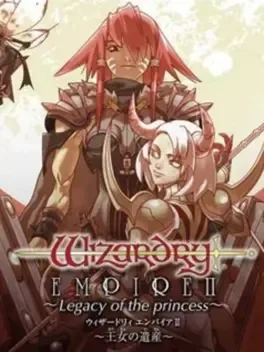
Wizardry Empire II - Legacy of the Princess (aka Wizardry Empire II - Oujo no Isan) is the second game in the Empire series for Playstation game consoles, and the first one not based on a Gameboy Color game, the third game in the series was released for the PSP console.