
Super Fantasy Zone


Buy
Part of collection:
Fantasy Zone
(last 3 games)

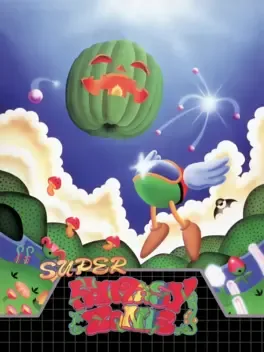
A port of the Arcade game, made exclusively for the Sega Genesis Mini 2/Mega Drive Mini 2.

The Fantasy Zone is a solar system consisting of eight brightly colored, fantastic planets. The evil Menons are trying to take over all of the planets in the Fantasy Zone by using misappropriated foreign currency to build their forces. It is the player's job to recover all of the coins and save the solar system!. This version is for Nintendo Switch.

Fantasy Zone II DX: The Tears of Opa-Opa is a special Fantasy Zone game first seen in the Sega Ages 2500 series entry, Sega Ages 2500 Series Vol. 33: Fantasy Zone Complete Collection. It is a remake of Fantasy Zone II: The Tears of Opa-Opa running on emulated Sega System 16 arcade hardware. As of MAME version 0.146u2, the game is currently available to play in an emulator. Fantasy Zone II DX was re-released with additional features in 2014 in Japan and 2015 worldwide as 3D Fantasy Zone II W on the Nintendo 3DS.
Could be interesting
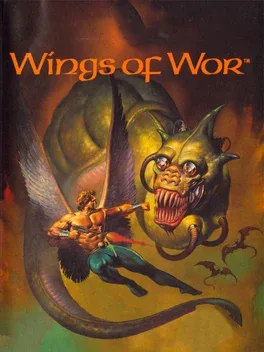
Gynoug, known in North America as Wings of Wor, is a 1991 scrolling shooter video game developed by Masaya and published by NCS Corporation for the Sega Genesis. The game was released in North America and Europe in 1991 and in Japan on January 25, 1991, and re-released on the Wii Virtual Console exclusively in Japan on May 20, 2008.
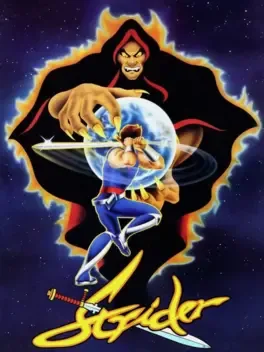
The controls of Strider consist of an eight-way joystick and two action buttons for attacking and jumping. The player controls Hiryu himself, whose main weapon is a tonfa-like plasma sword known as "Cypher". He can perform numerous acrobatic feats depending on the joystick/button combination used. Pressing the jump button while Hiryu is standing still will cause him to do a regular vertical jump, while pressing the jump button while pushing the joystick left or right will enable him to do a cartwheel jump. Hiryu can also slide under or through certain obstacles and enemies by first crouching down and then pressing the jump button. As well as his sliding move, both jumps can also be used to destroy weaker opponents. Hiryu is able to latch onto certain platforms, and climb across walls and ceilings using a metallic hook. While running down a sloped surface, Hiryu can gain enough momentum to allow him to do a longer cartwheel jump than usual. Numerous power-ups can be obtained from item boxes carried by certain enemies. These includes an extension to Hiryu's attack range that lasts for one hundred slashes, two types of health aids (represented by the kanji used to write Hiryu's name: 飛 and 飛竜), a max health extension (represented by the kanji 竜, the second character in Hiryu's name), an extra life, and a power-up that not only makes Hiryu invulnerable to attack but also increases his own attack abilities via shadow images of himself for 15 seconds.[3] Hiryu can also summon robotic companions known collectively as "options" that help him fight enemies. These consist of up to two mushroom-like droids, a saber-toothed tiger and a hawk, known individually as Option A, B and C respectively. The game has five stages: the Kazakh Soviet Socialist Republic (called "St. Petersburg" during the arcade game's attract sequence), the Siberian Wilderness, the Aerial Battleship Balrog (געלראב), the Amazonian Jungle, and the Grandmaster's lair itself, the Third Moon. Each of the stages is divided into a number of smaller sections, each with their own time limit and checkpoint location. The player has a three-point health gauge (which can be increased to five points with the health extensions. Hiryu will lose a life when either his health gauge is fully depleted, by moving him off the screen entirely (like falling into a bottomless pit) or when the game's timer reaches zero. It's Game Over when all of Hiryu's lives are lost, but the player can be given the opportunity to continue.
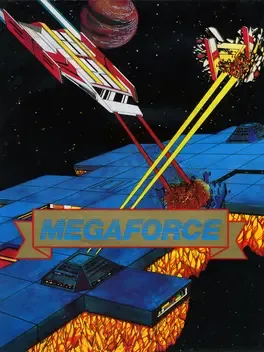
In the game, the player pilots a starship called the Final Star, while shooting various enemies and destroying enemy structures for points. Unlike later vertical scrolling shooters, like Toaplan's Twin Cobra, the Final Star had only two levels of weapon power, and no secondary weapons like missiles and/or bombs. Each stage in the game was named after a letter of the Greek alphabet. In certain versions of the game, there is an additional level called "Infinity" (represented by the infinity symbol) which occurs after Omega, after which the game repeats indefinitely.
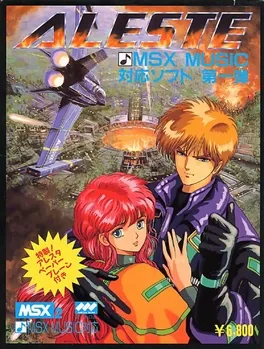
Your planet has been overrun by the meanest mutant vegetation ever created in a genetics laboratory. It's taken over buildings, labs, fighter craft... even people! And it's getting bigger... and meaner... with each passing second. But it hasn't taken over you. Now, you're going in on a mission to deliver a POWER STRIKE! You have a special attack ship with the ability to use weapons you free from the ground. The action is hot and heavy. The enemy is coming faster than you could ever believe! So fight hard and fast. If you don't turn the mutated vegetation into a giant tossed salad, they'll turn you into toast!
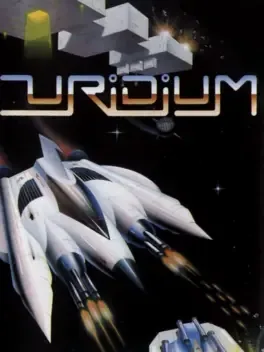
Uridium (released on the NES as The Last Starfighter) is a science fiction side-scrolling shoot 'em up originally designed by Andrew Braybrook for the Commodore 64, and later ported to other 8-bit machines. It consists of fifteen levels, each named after a metal element, with the last level being called Uridium (a fictional metallic element, not to be confused with the real metallic element iridium). The manual quotes Robert Orchard, who invented the name as saying "I really thought it existed".

Run… fly… dodge those obstacles, but return fire on wave after wave of attacking aliens. Armed with a really big gun, you have to defend yourself against the alien hordes using your wits to navigate around the screen. But watch out for those end of level bosses! Originating in the arcades, Space Harrier is a third-person rail shooter with pseudo-3D graphics, set in the same world as Fantasy Zone. The lone titular hero fights aliens with a fireball-launching cannon, which can also be used to transform the hero into a flying rocket. The protagonist is constantly in motion, but the speed of his movement can be regulated by the player.
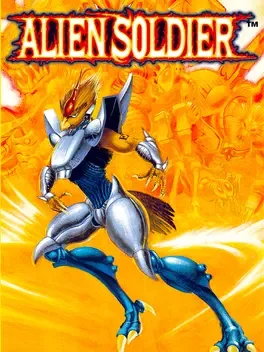
The planet Sierra is being attacked by Scarlet, a terrorist group lead by a vicious creature named Xi-Tiger who is plotting to destroy the human race. With vengeance, our hero Epsilon-Eagle will fight against Xi-Tiger as well as the terrorist organization that he formerly led.

Overcome an ever-expanding threat that might have already seeped too far into the core of humanity itself.
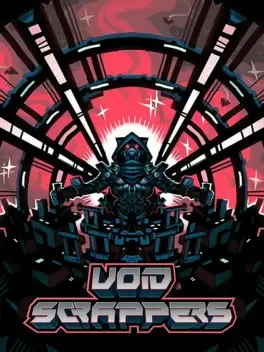
Blast hordes of alien ships into junk. Collect the scrap to upgrade your ship into an unstoppable force of destruction. Unlock new characters and weapons and upgrade your stats between runs.
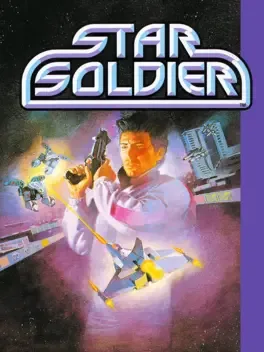
Star Soldier is a 1986 vertically scrolling shooter video game developed and published by Hudson Soft for the Nintendo Entertainment System and MSX. It is the first game in the Star Soldier series. The player pilots the starship "Caesar", traveling through space stations occupied by powerful supercomputers known as "Starbrains" who threaten the galactic empire. Star Soldier greatly resembles the earlier arcade game Star Force. The MSX version of the game was brought to the SG-1000 in Taiwan.