
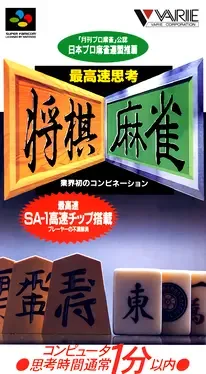
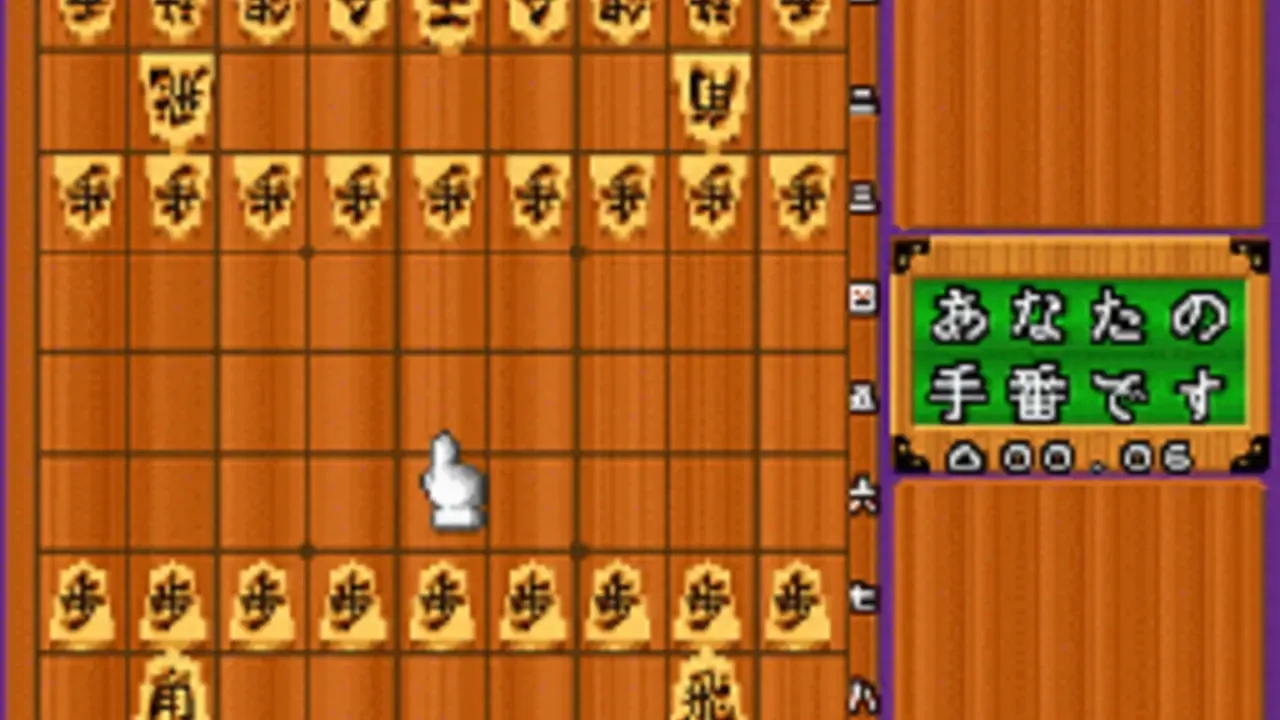
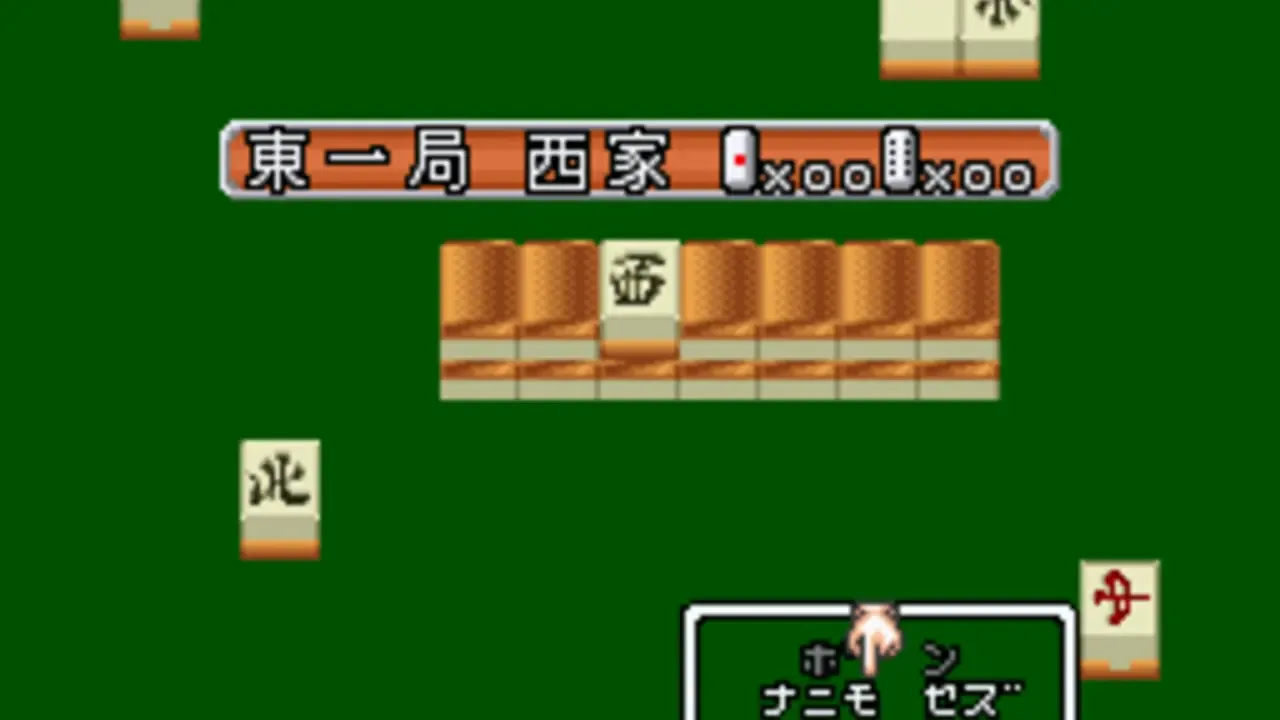
Saikousoku Shikou Shogi Mahjong


Buy
Could be interesting
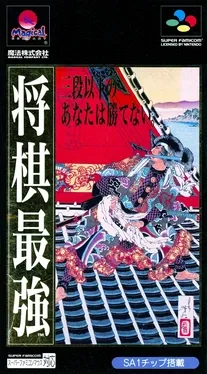
Shogi Saikyou is a Miscellaneous game, published by Magical Company (Mahou), which was released in Japan in 1995.
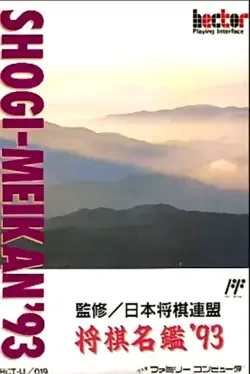
Shogi-Meikan '93 is a Miscellaneous game, developed and published by Hect, which was released in Japan in 1992.
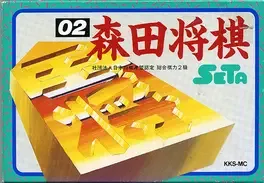
A Famicom Shogi game developed by Random House and published by Seta. Morita Kazuo no Shogi ("Kazuo Morita's Shogi") is a Shogi game from Random House. The game's namesake, Kazuo Morita, is a famous Japanese Shogi player that had previously been attached to several Shogi games prior to this one. Furthermore, Random House (not to be confused with the famous book publisher) is his development company. As well as playing regular Shogi against an AI opponent, the player has a few options regarding the set-up of the pieces. There is a mode where they place all the tiles on the board themselves, in case they wish to continue an existing game or maybe replay a famous match at its turning point.
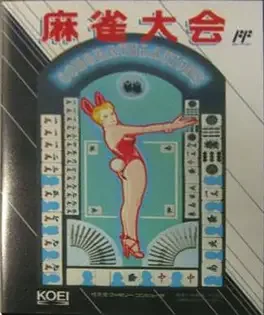
The first installment in Koei's mahjong series. Mahjong Taikai ("Mahjong Tournament") is a 1989 Famicom mahjong game from Koei and an unknown developer. It features multiple historical figures as possible CPU opponents, including Masamune Date and Napoleon Bonapart. As with any mahjong game, the goal is to complete a winning hand before any of the other players can, and the player earns an amount of points dependent on the "strength" of their winning hand. They might also lose points depending on who won and how. Koei would continue making Mahjong Taikai games for other platforms, including Super Mahjong Taikai for the Super Famicom in 1992.
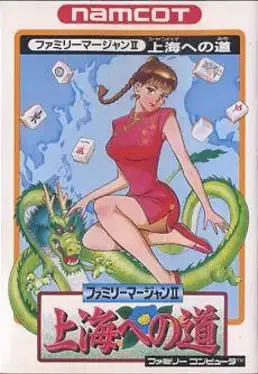
Family Mahjong II: Shanghai e no Michi is a Mahjong game released only in Japan for the Nintendo Famicom. Family Mahjong II: Shanghai e no Michi is a Mahjong game and the direct sequel to Family Mahjong. In addition to the standard Mahjong mode, there is a tournament mode with a slight RPG aspect to it, in that the player can enhance certain stats after winning games in order to increase their odds in future rounds of the tournament. The game is a one-on-one version of the game, less common in real-life Mahjong games but the standard for computer adaptations due to the reduced complexity of having only a single AI opponent. Nihon Bussan was responsible for Family Mahjong II's development and was at the time fairly well known for their Mahjong Arcade games.
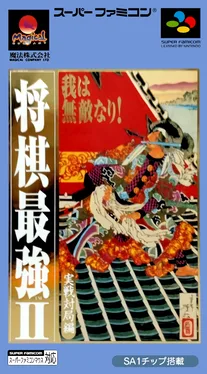
Shogi Saikyou II: Jissen Taikyoku-hen is a Miscellaneous game, published by Magical Company (Mahou), which was released in Japan in 1996.
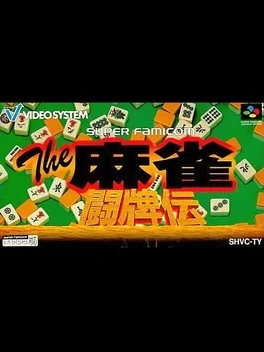
The Mahjong Touhai-den is a Miscellaneous game, developed by Khaos and published by Video System, which was released in Japan in 1993.
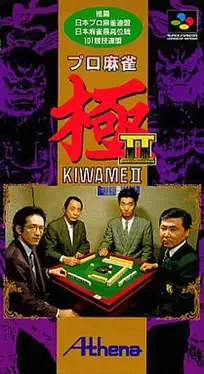
Pro Mahjong Kiwame II is a Miscellaneous game, published by Athena, which was released in Japan in 1994.
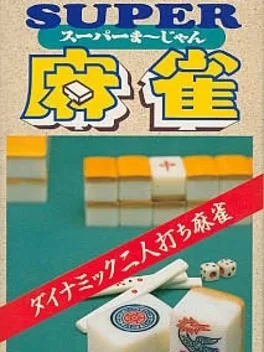
Super Mahjong is a Miscellaneous game, published by I'Max, which was released in Japan in 1992.
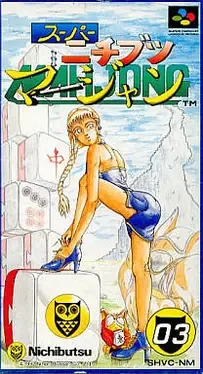
Super Nichibutsu Mahjong is a Miscellaneous game, published by Nichibutsu, which was released in Japan in 1992.