

Buy
Could be interesting

We were taught to survive - now that's going to change completely.

The titular feudal lord blasts flying saucers.

A Bust-A-Move inspired game from King.

Echochrome is a puzzle game created by Sony's Japan Studio and Game Yarouze. Gameplay involves a mannequin figure traversing a rotatable world where physics and reality depend on perspective. The world is occupied by Oscar Reutersvärd's impossible constructions. This concept is inspired by M. C. Escher's artwork, such as "Relativity". The game is based on the Object Locative Environment Coordinate System developed by Jun Fujiki—an engine that determines what is occurring based on the camera's perspective.

Hideyoshi plays rock-paper-scissors (jan-ken-pon) against two aliens.

Basic sidescroller where Hideyoshi kicks balls at aliens.

Terra Cresta is a vertically scrolling shoot 'em up. The player controls a ship, initially with limited firepower. Numbered pods appear containing further parts of the ship that will increase firepower. These additional parts combine with the player's ship to increase its firepower, and the final module transforms it into a fiery phoenix which is invulnerable for a certain period of time. Once the ship has multiple sections, the player may also split it, allowing it to fire in multiple directions. The player begins with three lives and it is possible to play with either one or two players.

The Nazis won World War II with technology from the future and now the future is paying for it with deadly electrical storms. You are a renegade mercenary sent back to World War II Germany to stop the weapon being built and therefore save the future.
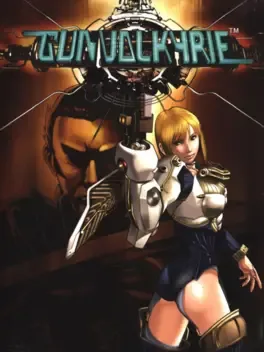
Gunvalkyrie is an alternate history/science fiction video game developed by Smilebit and published by Sega for the Microsoft Xbox. Originally developed for the Sega Dreamcast, its visual style was very similar to the final Xbox version. The Dreamcast version's distinguishing feature was that during the game's development, GunValkyrie utilized a unique control scheme using both a light gun and a controller. This control scheme was dropped when development shifted to the Xbox version. The gameplay is very different from most third-person shooters, due to a unique dual analog control scheme, which is the main contributor to the steep learning curve of the game. Players travel to various worlds investigating the disappearance of several colonies, with only giant mutated insect creatures left behind. These insects comprise the bulk of the enemies you face along the way. Players control Kelly or Saburouta with both analog sticks, the left controlling forward/backward movement and turning, while the right aims their weapons, and when clicked, allows quick-turns. Clicking in the left stick while pointing in a direction causes the character to boost. The left trigger is a boost/jump, and when combined with the left analog boost, can be strung together into combos to keep the player off the ground entirely, which is a necessity for some levels. Face buttons are used to select weapons, and the right trigger fires the selected weapon. The game comprises ten levels, the story unfolding via text between levels, or the occasional in-game cutscene. At the beginning of most levels, excluding boss battles, you have the choice of picking either Kelly or Saburouta. Kelly's primary weapon is fast but weaker, and she's overall faster and more maneuverable. Saburouta is slower, has more limited maneuverability in the air, and carries a stronger primary weapon, the Matchlock Cannon. Basically the two characters make up the two difficulty settings, with Kelly being the "Normal", and Saburouta being the "Advanced" setting. The real difference being that Kelly's style allowed several lock-on targets, while Saburouta's weapon splashed and was aimed at specific targets. Because of this, Kelly's gameplay is more frantic and requires less direct focus, while Saburota required specific aiming and direct attacks to be effective. Kelly is also the only character to upgrade her gearskin. The artistic style of the game is similar to the steampunk subgenre of fiction, but the game's designers prefer to call it "elec-punk," described as a step even further, with the harnessing of electricity for imaginative new uses. The game's stages are divided into indoor mechanical looking levels, with lots of gears and ornate metalwork, and outdoor stages, set in very organic looking valley's, craters, and other fantastic otherworldly locations.
