
Ecco the Dolphin


Buy
Part of collection:
Ecco The Dolphin
(last 3 games)

"Echo the Dolphin" compatible with 3D stereoscopic vision It has become easier to play with a new mode that eases the difficulty and a save function in the middle.

At the dawn of the 30th Century, dolphins and humans had been together in a cross-species society for 500 years. Together, they had set out to explore space, offering peace and friendship to all who would welcome it. But space had its dangers; a violent species known as the Foe decided to conquer Earth. However, the dolphins and humans drove them to the brink of defeat, and so the Foe sought vengeance on Earth. The few caretaker dolphins who had been left behind on Earth were not entirely defenseless; they were protected by their creation called the Guardian—a gigantic, sentient being made of a crystalline substance which projected a forcefield over the entire planet. Undeterred, the Foe made suicide attacks on the field, searching for a weak point.

Somewhere there is a place called the Endless Sea. There lives a giant whale named Big Blue. To find Big Blue, you have to open the Crystal Doors called Glyphs. To open the Crystal Doors, you must satisfy their wish. Guide Ecco and his friends to swim through the ocean and find Big Blue.
Part of franchise:
Ecco the dolphin
(last 3 games)

The 80 Games version only includes 40 Mega Drive/Genesis games, however it also has 40 AtGames developed games to bring the total up to the stated 80.


The Arcade Ultimate is a handheld Sega Mega Drive console on a chip created by AtGames. It can be seen as an enhanced version of the Arcade Portable. Like its predecessors, the name of this product is disputed and varies considerably between regions and distributors. While AtGames call it the Arcade Ultimate on their website, most packaging designs call the system the Gopher, with Sega Mega Drive Arcade Ultimate Portable, Sega Genesis Ultimate Portable Game Player, Sega Genesis Firecore Portable Player, and Sega Mega Drive Firecore Portable Player also in use. In Brazil the system is known as the MD Play.
Could be interesting

Ecco must stop the Vortex! He is “the stone that splits the stream of time.” He now faces his most dangerous quest yet. For it is not just his dolphin pod at stake, but the Earth and all living beings!

Ristar is a platform game developed and published by Sega for the Sega Genesis in 1995. A Sega Game Gear game, of the same name and genre, Ristar, was also released, which shared similar themes while possessing different level design and gameplay mechanics. The game stars an anthropomorphic cartoon star who uses his hands and long, stretchable arms to both move and combat enemies. Reception for the game has been generally positive, but the game's initial release was overshadowed due to the imminent ending of the Genesis's lifecycle and the succession of the Sega Saturn and other fifth generation video game consoles. While never receiving any sequels, Sega has re-released the game a number of times digitally and on Sega-themed compilations, and has occasionally given Ristar himself cameos in other Sega properties.
Somewhere there is a place called the Endless Sea. There lives a giant whale named Big Blue. To find Big Blue, you have to open the Crystal Doors called Glyphs. To open the Crystal Doors, you must satisfy their wish. Guide Ecco and his friends to swim through the ocean and find Big Blue.

Sonic the Hedgehog is a 2D side-scrolling platformer developed by Sonic Team and published by Sega for the Genesis/Mega Drive. Players control Sonic the Hedgehog, who can run at near supersonic speeds and sets out on a quest to defeat Dr. Robotnik, a scientist who has imprisoned animals in robots and seeks the powerful Chaos Emeralds.
At the dawn of the 30th Century, dolphins and humans had been together in a cross-species society for 500 years. Together, they had set out to explore space, offering peace and friendship to all who would welcome it. But space had its dangers; a violent species known as the Foe decided to conquer Earth. However, the dolphins and humans drove them to the brink of defeat, and so the Foe sought vengeance on Earth. The few caretaker dolphins who had been left behind on Earth were not entirely defenseless; they were protected by their creation called the Guardian—a gigantic, sentient being made of a crystalline substance which projected a forcefield over the entire planet. Undeterred, the Foe made suicide attacks on the field, searching for a weak point.

Alien Storm is a side-scrolling beat 'em up. The game resembles Golden Axe, with a similar artistic style, three playable characters (a man, a woman, and a novelty character) and pick-up or power-up special attacks. The player (one player only on the Master System version, up to two players on the Mega Drive version, three on the arcade version) selects from the three different characters to embark upon a quest to save the Earth from an alien invasion. All of the Busters are playable from the beginning of the game. There are 6 missions to complete (8 in the Mega Drive version) with several stages, and each mission has the player blasting aliens, from the streets to the mother ship, where the mother of all aliens can be found. This task becomes increasingly difficult with each new mission, and the aliens are capable of hiding inside objects such as plants, postboxes, trashcans, drums, and other items. Each mission has an objective such as rescuing people or destroying an UFO. When dealing with a few aliens, flying heads will appear, which can be shot to collect life or energy. Energy is used specifically to power the energy based attacks of the player's weapon (such as flames or electricity) and to use the much more powerful special weapons. In a similar format as other early Sega arcade games, each character has unlimited usage of various short-range attacks, i.e. punches, kicks. Along with these standard attacks, each character has their own individual weapon (Garth's weapon that shoots lightning is replaced with a flame weapon in the Master System version). Special attacks are also included, and vary depending on the character chosen at the start of the game. For instance, Garth summons an U.S. Air Force starship that drops bombs across the street (in the Master System version he has Karen's special, a ballistic missile strike). Scooter will teleport out of his present location and leave a series of bombs that will blow up on the appearance of aliens, after which he will re-appear (in the Mega Drive version he just explodes, leaving his head, which his new body returns to retrieve). Karen calls down a nuclear missile, which incinerates every foe on the screen. However, a large amount of energy is depleted by using each character's special attack, and cannot be used if the energy of the player's character is too low. There are few bosses in the game. The arcade original only features a single boss that has three distinct forms. The Mega Drive port has two of these forms as two separate bosses. At the end of each mission, the side-scrolling gameplay shifts to either a shooting gallery perspective where the player must take out the aliens that pop out of various locations, similar to the bonus stages of Shinobi and Shadow Dancer, both also by Sega, or a running section that is similar to the side scrolling mode but plays like a horizontal shooter instead with projectile weapons.
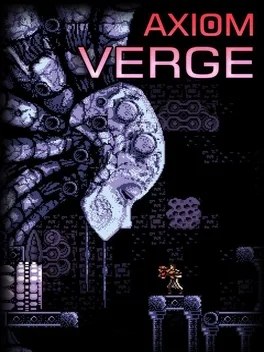
After a lab accident, a scientist awakens in a mysterious, alien world. Is this a distant planet? The far future? Or a complex virtual-reality computer simulation? Plumb the recesses of a large, labyrinthine world in order to learn its secrets and uncover your role within it. Discover tons of weapons, items, and abilities, each with their own unique behaviors and usage. You’ll need your wits to find them all. Combat bizarre biomechanoid constructs, the deadly fallout of an ancient war, and the demons of your own psyche. And finally, break the game itself by using glitches to corrupt foes and solve puzzles in the environment. Life. Afterlife. Real. Virtual. Dream. Nightmare. It's a thin line. It's Axiom Verge.
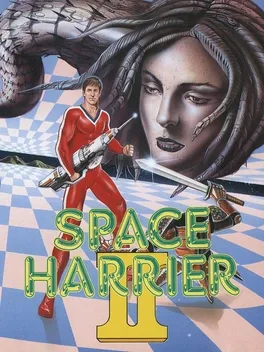
A call for help comes from deep in the universe. Fantasyland has been taken over by destructive forces. Quick on the scene is Space Harrier equipped with his laser, who must attempt to outwit and outmanoeuvre the hoards and prevent Fantasyland from being blown into oblivion!

The whole Kidd family is upset! Alex’s father, King Thor, is missing, and they suspect he has been kidnapped by Ashra, the mean ruler of the planet Paperock. Alex speeds to Paperock to investigate, but the creatures of Paperock decide to hinder his efforts and try to keep him away from Sky Castle, Ashra’s hideaway. Luckily Alex knows how to jump, punch and kick his way through the most stubborn of enemies.

ToeJam & Earl is an early 1990s dungeon crawler. The game features two alien rappers, who have crash-landed on Earth and parodies 1980s urban culture. The game's design was heavily influenced by the role-playing video game Rogue, and took from it such features as the random generation of levels and items. Played from a 2D-top-down perspective the game contains both single-player and two-player cooperative modes. The latter displays a single screen when both characters are near each other, but splits it apart when they are not. Playing the game with two players reveals dialogue and jokes between the characters not heard in the single player game.