
BreakThru!


Buy
Could be interesting
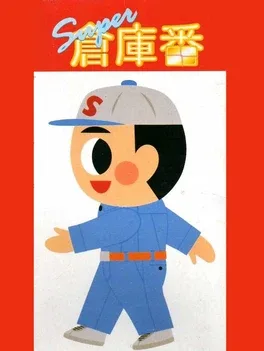
Super Sokoban (or Soukoban) is a puzzle game in which the player must push crates around a maze to their designated storage area, ensuring they do not accidentally push a crate into a position where it cannot be recovered. Thinking Rabbit created the original game in 1982 on home computers, and Super Sokoban is the first Super Famicom game to follow the same blueprint. The intro establishes that the eponymous Sokoban, or warehouse worker, must perform enough box-pushing puzzles to earn enough cash for a flashy new car so that he might finally impress the girl of his dreams. An added wrinkle is that each stage has a fixed move limit, and so the player must not only push the boxes in the right order but do so with maximum efficiency. The game was not released outside of Japan.
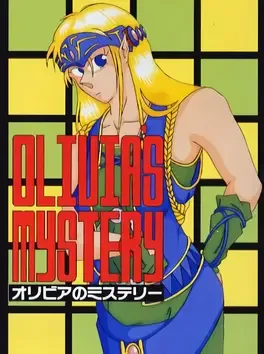
Olivia's Mystery is a Puzzle game, published by Altron, which was released in Japan in 1994.
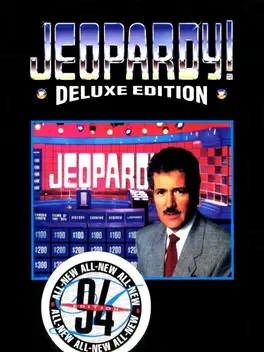
Jeopardy! Deluxe Edition is an updated version of it's Jeopardy! predecessor which features over 3,500 different new questions along with the standard features of Jeopardy such as Daily Doubles, a digitized likeness of the host, Alex Trebek and even the theme music. Like it's previous version, the player uses the buttons to buzz in and using the d-pad to highlight letters and spelling out their answers. The player can also play against two friends or play against the computer A.I. instead.
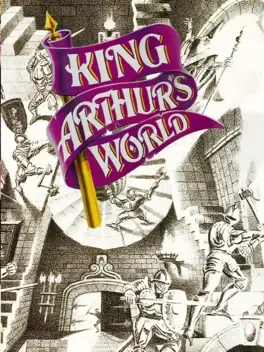
This is a 2D side scrolling strategy game. You take the role of King Arthur and lead your army into battle against evil. You'll travel to many worlds including fighting dark knights, underworld orcs, and cloud giants. One of the few games that is Super NES Mouse capable. You are given a certain amount of troops each level. Passwords are used to save your progress between levels. The levels have enemies you must thwart, traps you should avoid, and gold to be won.
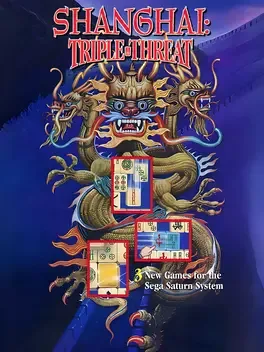
Another version of the ancient game of Mah-Jong. The player is presented with an arrangement of tiles, lined up together and stacked, with either 2 or 4 of each of an array of patterns. These must be removed by matching pairs, but only tiles which are visible and have a space to the left or right can be removed. This release in the Activision's Shanghai series includes three games along with the Classic Shanghai. In The Great Wall, the tiles are stacked vertically, and fall when lower tiles are removed, a lá Tetris. In Beijing, gaps are created to slide groups of tiles along. The Golden Tile sees two players attempt to clear a set layout at once. The Triple-theme continues with three game modes: Solitaire, 2-player "Pandamonium", and Arcade. Three themed tile sets complete the "Triple Threat".
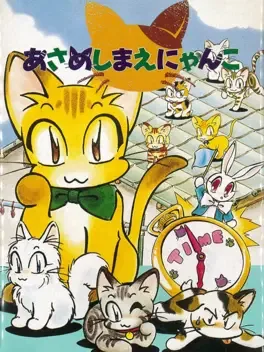
Asameshimae Nyanko has similarities with Reversi (or Othello) and with fights that are similar to rock-paper-scissors to intercept additional moves with kittens that have different proficiency with vertical/horizontal and diagonal moves. In the game, players partake in a Reversi-esque game and get to choose a number of stages to play on and the type of kitten they want to use. They can also change the rules and settings to an extent. It's red versus blue, with a random player going first. As players would in Reversi or Othello, sandwich kittens vertically, horizontally or diagonally (though since the game is isometric, it's hard to say vertically or horizontally). They will change all the kittens in between to a certain color, but can additionally select cats in the area to do battle with. Winning allows players to further convert cats to their cause. There are special items which have certain effects such as making players lose a turn, but, there isn't much interruption from them.
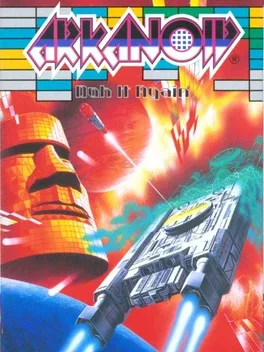
Much like the game Breakout, the player controls the "Vaus", a space vessel that acts as the game's "paddle" which prevents a ball from falling from the playing field, attempting to bounce it against a number of bricks. The ball striking a brick causes the brick to disappear. When all the bricks are gone, the player goes to the next level, where another pattern of bricks appear. There are a number of variations (bricks that have to be hit multiple times, flying enemy ships, etc.) and power-up capsules to enhance the Vaus (expand the Vaus, multiply the number of balls, equip a laser cannon, break directly to the next level, etc.), but the gameplay remains the same.
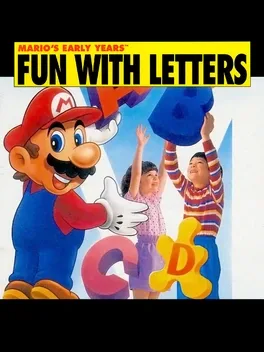
Mario's Early Years: Fun With Letters is a collection of letter-related activities for kids ages 3 to 6. Playing with either Mario or Princess Toadstool, you select from 10 different activity worlds each filled with different activities that range from letter recognition to sentence fill-in, letter-sound recognition, vowel recognition, etc. Each activity can be played in either Discovery mode, where you are free to do what you wish, or in Learning mode, where Luigi guides you through the activities.
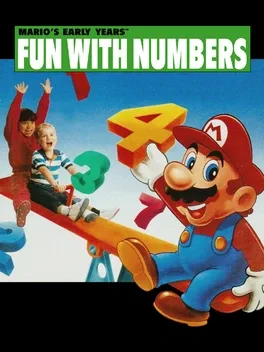
Mario's Early Years! Fun with Numbers is an educational Mario game that taught numbers and basic geometry to children. The game takes place on a set of islands to which Mario and Princess Peach sail. The player can click one of the islands to enter, after which the player sees Luigi asleep. Once the player clicks him, various activities must be performed to learn. Activities include counting objects, identifying shapes, comparing sizes, and sorting.
Undake30 SameGame Daisakusen Mario Version is a Mario puzzle game released only in Japan for the Super Famicom. It was released as both a promotional cartridge and as a broadcast on the Satellaview. The game can be played with a standard joypad or the Super Famicom Mouse and is similar to the card game Monte Carlo. The game centers around a large playing field composed of a random arrangement of Mario heads, Coins, Yoshi Eggs, Fire Flowers, and Super Mushrooms. If two or more icons are connected, the player can move the cursor and double-click to make all the connected icons disappear. Once the entire grid is clear, the game ends.