
Breakout

Buy
Could be interesting
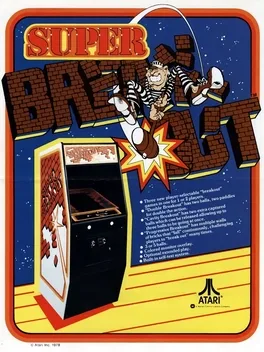
Super Breakout is an arcade game released by Atari in 1978. It utilizes a Motorola M6502 (running up at 375 KHz) and, as the name suggests, is the sequel to Breakout, which was released two years earlier. There are three different modes to choose from: Double Breakout, the playfield for which contains in fifty-two orange blocks (5-14 points), fifty-two green blocks (1-6 points), two paddles and two balls, Cavity Breakout, which contains in forty-four orange blocks (7-21 points), and fifty-two green blocks (1-9 points), one paddle, and three balls (the second and third of which have to be freed before they come into play) and Progressive Breakout which contains fifty-two blue blocks (7 points) and fifty-two green blocks (5 points), one paddle, and one ball - and the blocks shall be lowered down towards the paddle, at a rate determined by the number of times the ball lands on your paddle, but as the ball destroys them, additional rows of blocks shall appear at the top of the screen and be lowered down towards the paddle at an increasing rate. This is also the only mode for which it's possible for a player to receive an infinite amount of points by playing, but the score display shall roll over at 10000.

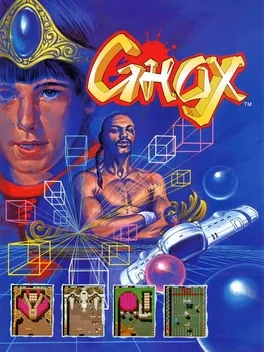
Developed by Toaplan and released in 1991, Ghox is an arcade Puzzle game in a similar vein to breakout, where the aim is to destroy all the blocks on screen, though far more complex, involving bosses, items, multiple simultaneous balls at once and a fantasy theme.
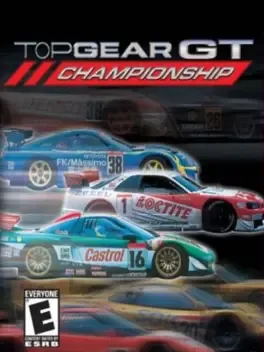
If realistic racing is your cup of tea, get behind the wheel of the most complete hand-held racer ever. You'll speed through six of Japan's most grueling circuits, blowing past the competition and taking the checkered flag. If the real deal doesn't do it for you, use the game's built-in Track Editor to put together a course that will meet your standards. The All Japan Grand Touring Circuit takes center stage in this detailed extravaganza, as 22 of the Circuits best drivers are the stars here. The vehicles can all be tweaked and upgraded allowing you to truly control your performance and style. Several modes of play make for high replay value and a huge fun factor, while the 32-bit graphics are good enough to pass for those of a home platform game. It's not every day that you get the chance to challenge the world's best GT racers, so you'd better come with your wits sharpened and your seatbelt on.
Monster Guardians is a Role-Playing game, developed and published by Konami, which was released in Japan in 2001.
Pinball is a 'pinball simulation' on the Microvision system but plays like Breakout. Controls are the same as in Block Buster: players use the paddle knob to move a paddle left and right along the bottom of the gameplay screen to bounce up a ball.
Breaker is Konami's fourth video game. It is their last game to be a clone of Breakout, with the following games Space King and Rich Man being clones of Space Invaders and Bee Gee respectively.
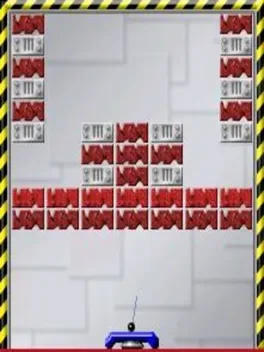
Brick Breaker is a video game developed by Canadian Developer Ali Asaria that came preloaded on certain BlackBerry devices and is now available on the iOS App Store.
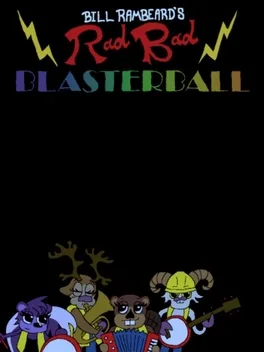
In this block breaker game inspired by 1976's Breakout, you play as Bill Rambeard at the heights of his powers competing in the fast-paced, razzle-dazzle world of Blasterball. Bill is joined by a cast of characters who will help you along by playing polka as you break through the procedural-generated puzzles. Your only goal is to get the highest score you can!
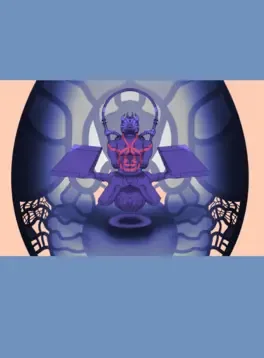
"The Past is Present" is a breakout-inspired game where your objective is to survive as long as possible. Blocks at the top of the screen will fall down and increasingly gain strength. While you can level up and gain a stronger ball, you have another resource with time travel which is gained through clearing blocks. When time traveling, the map will reset to the stated time but you will also run into your past self, if you are hit by your other self's ball you will get a game over also but if they get hit by your ball they will be defeated.