
3-D Tic-Tac-Toe


Buy
Part of collection:
Tic-Tac-Toe
(last 3 games)
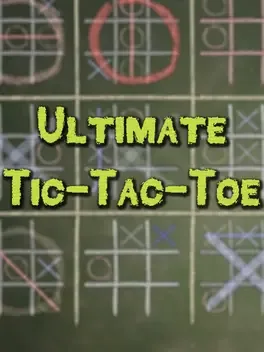
Ultimate Tic-Tac-Toe takes the classic game of Tic-Tac-Toe and adds a strategic layer to it. Game modes: classic, classic forget, ultimate, ultimate forget, ultimate forget total.
It's Tic Tac Toe... with zombies, knights, orcs, and scientists!

Academy: Tic-Tac-Toe is a tic-tac-toe game for DSiWare that features 4 variants on the classic game.
Could be interesting
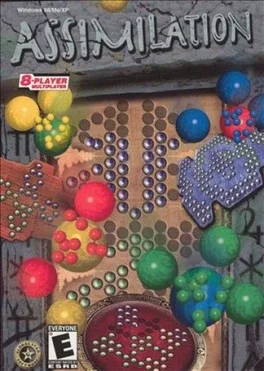
Dominate your opponents with coloured marbles.
A graphically simple but strategically complex mobile game that touts itself as Infinite Tower Defense. Supporting up to thousands of towers on a single map, the player's objective is to reach the highest wave possible whilst unlocking hundreds of various global upgrades.
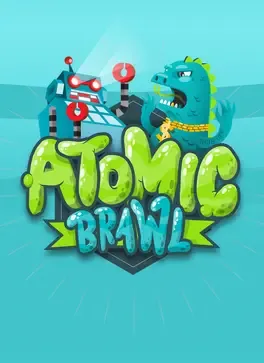
Atomic Brawl is a free indie strategy game played in-browser against other people in real time, or asynchronously. It currently features 180 unique cards which can be combined to to create vastly different play styles. It's themes are light hearted and comedic which contrast the deep and complex tactics.
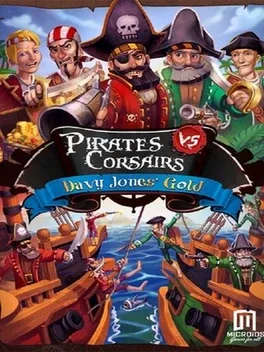
Davy Jones' gold has been lying at the bottom of the sea for years... ... it's time to bring it to the surface!
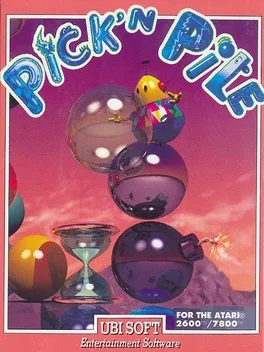
Pick 'n Pile is a Tetris-style puzzle game. On each level there are a variety of symbols arranged in columns on the screen. By moving the symbols around, you need to create columns which contain identical symbols; once all the symbols in a column are the same, that column disappears. Your goal is to earn points and complete the levels by making all of the symbols on the screen disappear. Occasionally, you may become stuck with a symbol that doesn't match anything onscreen; when this happens, you can call for an additional symbol to drop onto the screen. However, as the symbol which appears is random you may need to create quite a few symbols before the one you need appears. Each level has a time limit in which it needs to be completed; run out of time and you lose a life; lose all lives and the game is over. In addition to the regular symbols, there are also some special objects on the screen which may help or hinder your progress. These include bombs which destroy several symbols at once, blocks which may get in the way or be arranged to help out, death heads which diminish time more quickly, and flower pots which can't be moved.

A 3D puzzle game where you need to clear the level of different kinds of hexagons.
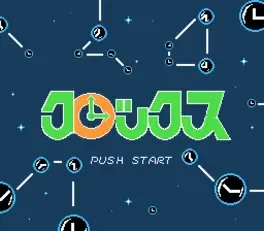
The fourth game featured as a coverdisk on the Japanese magazine Famimaga, Clocks is a Tetris variant in which clock faces must be placed together form larger shapes. Clocks, or Famimaga Disk Vol. 4 Clocks (and occasionally as "Clox"), is a falling blocks puzzle game that is superficially similar to Tetris or Columns. Single clock faces depicting one of four angles fall from the top and the player needs to manipulate and place them so they can form larger objects, such as simple formations like squares, diamonds and hourglass shapes to more object-intensive shapes like octagons and hexagons. The four angles include 180 degree lines ("12:30"), 90 degree lines ("12:15"), 135 degree lines ("~12:22") and 45 degree lines ("~12:07"). Once a clock face is placed, the lines from it extend to connect to any other lines that surround it. Placing lines in such a way that it forms a shape - for example, placing four 90 degree clocks in such a way to form a square - earns the player points and removes the clocks used to form the shape. Larger shapes are more risky but earn more points. The player is given some leeway to recover from mistakes: should the player hold the down button to make a clock fall faster, it'll destroy any clocks underneath. A misplacement, therefore, can be rectified with a correctly positioned clock if it falls quickly enough to crush the offending clock. However, the player can only do this a limited number of times per stage.