
Popular games for collection Game & Watch
Donkey Kong II was developed by Nintendo R&D1 and released as part of the Game & Watch Multi Screen series, featuring two LCD screens. It was released in 1983. Donkey Kong Jr. has to touch a key, then it moves up to the top screen. Donkey Kong Jr. has to climb to the top screen while avoiding things such as electrical wires. When he gets to the top screen, Donkey Kong Jr. will have to touch the key again, and it will move to the keyhole of one of the chains. Donkey Kong Jr has to climb up the rope below the keyhole, while avoiding birds. When he gets to the top of the rope, one of the chains will unlock. He has to do this 4 times until he saves Donkey Kong. After that, the game will start over, at a somewhat faster pace.
Experience a piece of Nintendo history with the Game & Watch series for Nintendo DSiWare. Each title is a perfect recreation of a classic LCD game from the early 1980s, including normal Game A and alternate Game B modes.
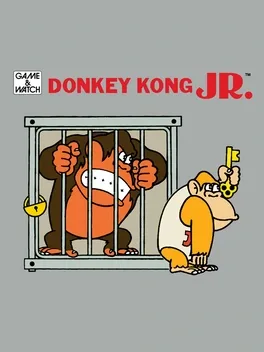
The first Game & Watch version of Donkey Kong Jr. is the first game in the New Wide Screen series. It is a single-screen single-player game.
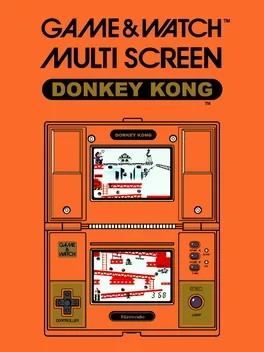
Donkey Kong is a Multi Screen Game & Watch game released in 1982. It was based on the arcade game Donkey Kong, with gameplay based only on 25m, the first stage from the arcade version. This was the first Game and Watch game to be based on pre-existing Nintendo characters, and it was the first video game system to include the D-pad, a feature of all future Nintendo systems. The game unit's model is DK-52, with the DK standing for Donkey Kong. The game was a huge success, selling over 1,000,000 copies worldwide.
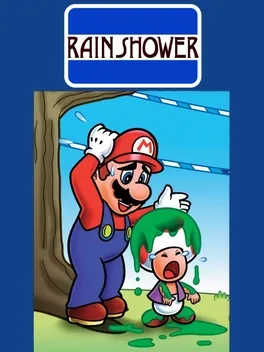
Mario must move his friends away from the water balloons dropped by Bowser in Modern Mode. Also, on Hard Mode, Waluigi occasionally moves the ropes around to make things harder for Mario.
A cancelled port of Octopus (the 1997 remake) for the e-Reader.
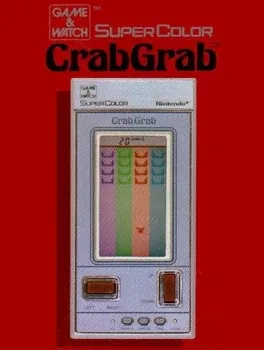
Crab Grab is a Super Color Game & Watch video game released in 1984. It's model number is UD-202. In the game, crabs are moving towards your character. You must push them away and not let them pinch you. If three crabs pinch you, then it'll result in a game over, and you'll have to start over. There are four columns, each a different color (from left to right: purple, green, orange, and blue). The crabs will start to come from the top, and you'll have to move your character from left to right to push them away, though more and more will always come. The game was one of two Super Color games, the other being Spitball Sparky.
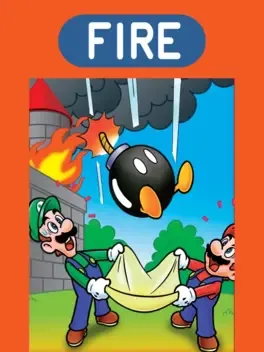
Mario and Luigi attempt to catch Toads, Yoshis, and Donkey Kong Jrs. after they jump out the window of Princess Peach's burning castle. The catch is that different characters fall at different speeds: Toads bounce the highest, while Donkey Kong Jrs. bounce the lowest. Yoshi Eggs also appear and contain either a Bob-omb or a Moon (a Super Star in the first game); the eggs break open when they are caught or hit the ground. The player receives two points for catching an egg. If a Bob-omb reaches the carriage, everyone, including the Mario Bros., runs away as the carriage explodes, and the player gets a miss. If the Mario Bros. catch a Moon, the player receives five points. At 200, 500, and 700 points, Peach appears and blows a kiss, sending out a heart for Mario or Luigi to catch to remove a miss. Music is also featured in this version, with the tempo changing depending on the speed of the game. In the Game & Watch Gallery 4 version, the time of day changes every 200 points collected. If the player selects this game in Game & Watch Gallery 4 yet does not start playing it, a humorous sequence plays. In particular, Mario and Luigi catch a Toad sent flying to the left and a Yoshi sent flying to the right, only to narrowly stop when discovering their next "rescue" was in fact a Bob-omb, which detonates inches from them, and are then forced to flee as a dozen Bob-ombs are raining from the sky.
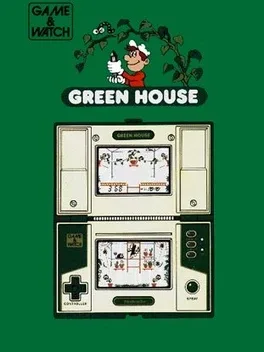
Greenhouse is a game in the Game & Watch series. The player controls Stanley, and the objective is to spray inchworms and spiders that try to eat the flowers in a greenhouse. The inchworms crawl along vines on the top screen, while the spiders crawl along webs on the bottom screen, and the player has to try to hit them with a spray gun before they reach the flowers.
A Game and Watch game from the original Silver collection from 1980 that was recreated as a DSiWare game.

The Modern version of the game has Mario working in a cookie factory. Yoshi and Toad are featured instead of the drivers, with Yoshi eating the Yoshi Cookies made on the left conveyor belt and Toad packaging the Yoshi Cookies made on the right conveyor belt. Boos also occasionally appear, taking up cookie dough slots on the second floor. Unlike in Classic Mode, however, Mario is allowed to fall down onto an elevator platform, but touching the very bottom or top still earns the player a miss. When Mario amasses 200, 500, and 700 points, a heart appears for him to remove a miss. Music is also featured in this version, with the tempo changing depending on the speed of the game.
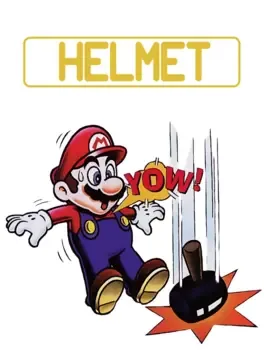
Mario or Wario must dodge various falling tools and collect coins.
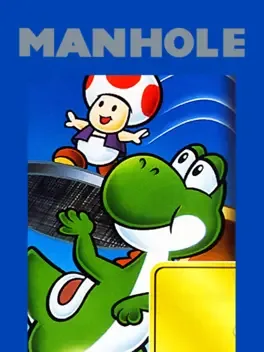
Manhole was remade with an updated "Modern" version for Game & Watch Gallery. Toad, Donkey Kong Jr., and Mario are the pedestrians in this version, walking at different speeds, while Yoshi is the character the player controls. In this version, four manhole covers can stay up at once, unlike in the original. The manhole covers can drop from characters stepping on them, causing the next pedestrian to fall if Yoshi does not act quickly. Yoshi can also hold a manhole cover in place to keep it from falling. He holds up the upper manhole covers with his head and the lower ones with his tongue. At 200, 500, and 700 points, a Chubby comes out of the ground and throws a heart for Yoshi to catch to remove a miss. This version also features music, with the tempo changing depending on the speed of the game.
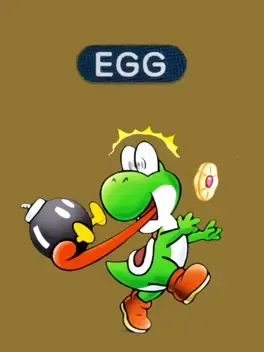
A Light Blue Yoshi must eat cookies as they pop out of an oven (a concept similar to Yoshi's Cookie), but he has to avoid the Bob-ombs.
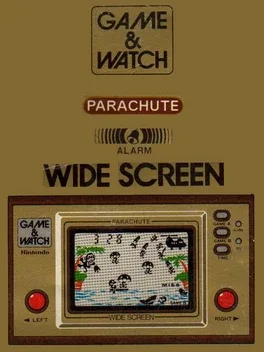
Parachute is a game for the Game & Watch where you have to save people from a helicopter and make them land in your boat. You will direct your boat under the person try and let them land safely. If they land in the water, a shark will come and eat them- if this happens three times you will lose and will have to start over.
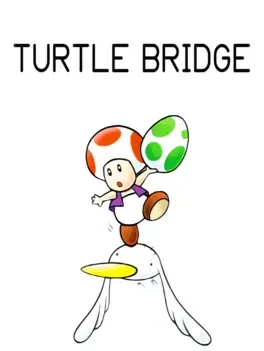
Toad delivers items from Mario to Princess Peach by using a bridge of Goonies, which sometimes dive at passing balloons. The name of the minigame is from the original game, which involved a bridge made of turtles.
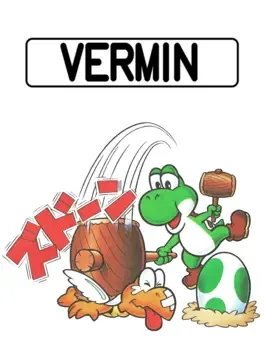
A Yoshi must protect six eggs from Fly Guys, Para Troopas, and Boo Buddies.
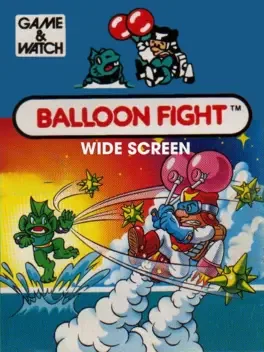
The New Wide Screen version of Balloon Fight for the Game and Watch. The game is similar to the NES classic Balloon Fight, particularly its Balloon Trip mode. The model number for the original version is BF-803, while the model number for the New Wide Screen version is BF-107. The BF in the model numbers stands for Balloon Fight.
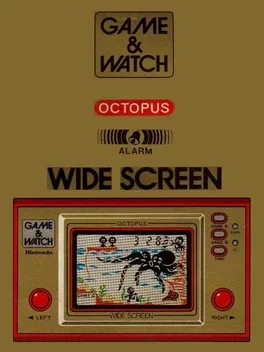
Octopus is a Game & Watch game that was released on the G&W widescreen series. In the game, you, the diver, must get around an octopus whom is trying to capture you and get to the treasure. When Mr. Game & Watch returns to the salvage ship, he gets three extra points. The player's three chances are measured by extra divers on the savage ship. When one is attacked by the Octopus' tentacles, another takes his place.
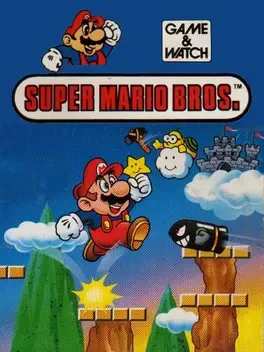
Super Mario Bros. for the Game & Watch was a game that was released on the Crystal Screen and New Wide Screen unit. While the exact date of its release is unknown, it can be confirmed that it was released sometime in June of 1986 and March of 1988. A special edition of the game, which came with a winner certificate, a license card, and battery cover stickers, and a copy of the game in a Diskun-shaped case was given away in August of 1987.

A cancelled port of Fire (the 1997 remake) for the e-Reader.
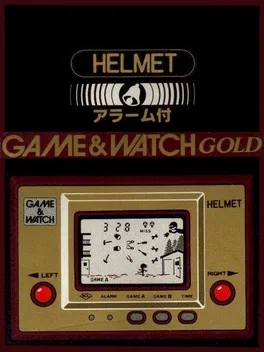
Helmet is a Game & Watch game that was released in 1981. In the game, you have to run from one house to the house across from it without getting hit by falling tools that your enemies is throwing at you. Sometimes the door on the other house will close, making you run around until it opens.
There are two Game & Watch games called Mickey Mouse. In this one, which is part of the Panorama series, Mickey has to juggle while balancing on top of a ball. Mickey can lose a life by catching a fire stick instead of a juggling stick or missing catching the juggling stick completely.